

Process heat is a major energy demand in New Zealand, and reducing reliance on fossil fuels is key for energy efficiency, affordability, and resilience.
Biomass — renewable organic material such as waste wood or residues — offers a practical low-carbon, lower cost, alternative to coal and natural gas, helping businesses cut emissions and operating costs while maintaining reliable heat supply.
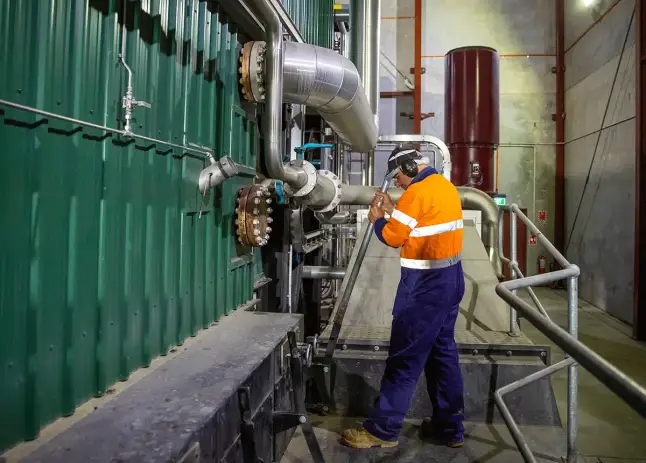
Transitioning to biomass: lessons learned
EECA commissioned Aurecon to review a number of projects completed by New Zealand businesses that have transitioned to biomass from both coal and natural gas.
These case studies offer insights for other businesses considering similar investments. Each project took a different approach, using a range of technologies, woody biomass fuels and implementation pathways.
Download our newest case studies
These case studies, published in 2026, dig into the detail of projects at Alsco, AFFCO and Glenholme school. These provide examples of fuel switching from natural gas.
-
Alsco Uniforms
At their Christchurch site, Alsco Uniforms replaced a 50-year-old coal-fired boiler with a 3 MWth wood pellet-fired boiler and fuel handling system. The project took 1 year and 9 months to complete and was driven by the need to replace the coal boiler, increase reliability of the steam supply, secure a long-term energy supply and achieve emissions reductions targets.
-
AFFCO Horotiu
AFFCO Horotiu replaced an aging 10MWth natural gas-fired boiler with an 8.4MWth wood pellet-fired boiler and fuel handling system. The project took 2.5 years from concept to completion, and was the third wood pellet boiler installed at an AFFCO site.
-
Glenholme School
Glenholme School in Rotorua replaced two separate natural gas-fired boilers (155 kWth boiler for space heating and a 68 kWth boiler for pool heating ) that were around 37 years old and end-of life, with a modern wood pellet-fired boiler and fuel handling system, to heat the central heating system and the school pool during the summer months.
Download 2025 case studies and summary report
These case studies, published in 2025, give in-depth detail into the biomass boiler projects at Fonterra, Golden Bay Cement, McCain and JS Ewers. These case studies are analysed in an additional summary report.
-
Golden Bay Cement
Golden Bay Cement has introduced a large-scale biomass fuel system which includes a biomass storage area, hopper, conveyor belt, and screw-feed system designed to fire waste biomass into the precalciner, reducing the volume of coal required for cement production.
Download case study [PDF 1.1 MB]
-
Fonterra Waitoa
Fonterra’s large-scale 30 MWth bubbling fluidised bed (BFB) biomass boiler can fire a wide range of fuels with higher moisture and ash content, as well as larger particle sizes than conventional grate boilers can manage.
-
McCain Timaru
McCain converted its 14 MWth lignite coal boiler to operate on biomass in a travelling grate furnace. The project demonstrates that converting existing coal boilers to biomass can deliver efficiency and operational gains.
-
JS Ewers
JS Ewers depends on process heat for maintaining temperatures inside 12 hectares of greenhouses where they grow vegetables. The company installed two new 4.5 MWth step grate biomass boilers in the main boiler house and converted 5 smaller units (3.3 MWth total), to run on wood pellets.
Summary of 2025 case studies
Despite challenges, these four biomass projects improved boiler efficiency, lowered carbon and maintenance costs, and strengthened energy resilience.
Together, they show that while there is no single pathway, biomass can successfully replace coal across varied industrial settings, delivering both operational and environmental benefits.
Read next
-
Biomass boilers for industrial process heat
Information for businesses looking for low-carbon alternatives to fossil-fuelled boilers.
- Process heat
- Decarbonisation
- Fuel switching
-
Clean alternatives to fossil fuelled heat plants
An overview of low-emissions technologies for industrial process heat.
- Process heat
- Decarbonisation
- Fuel switching
-
Guidance for procuring energy efficient biomass boilers
Guidance for businesses and organisations to help select and procure an energy efficient biomass boiler.