

Objectives
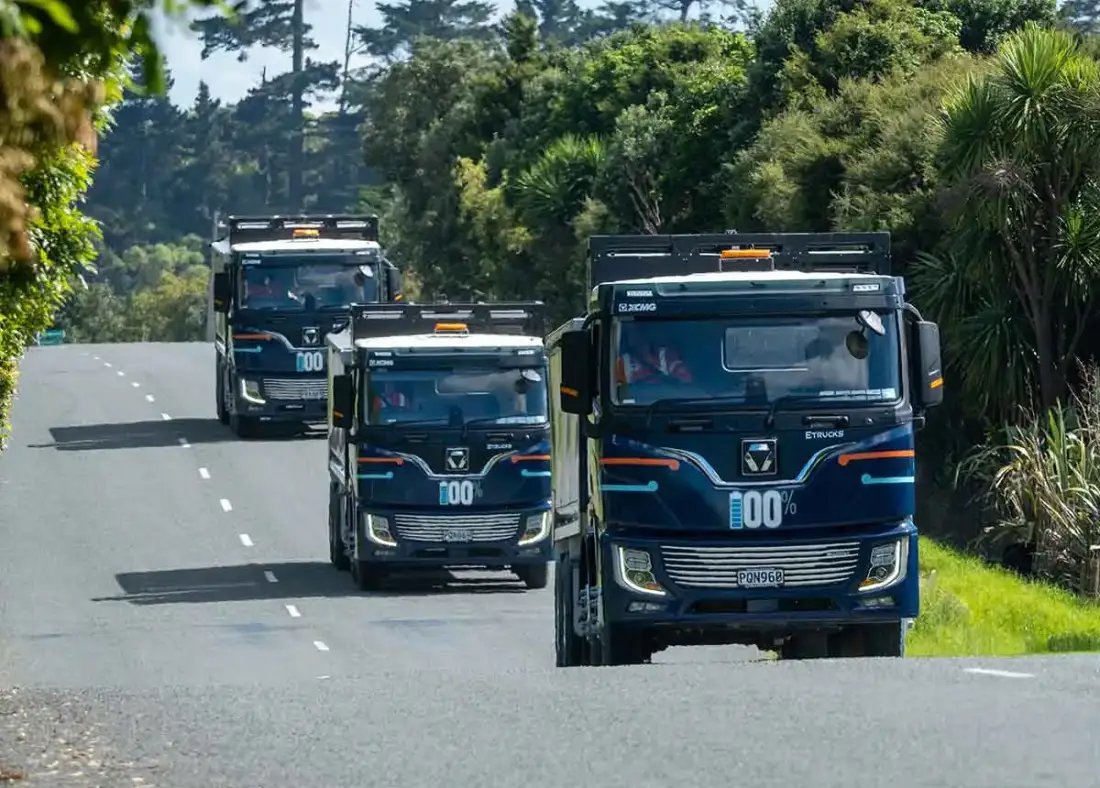
The Low Emissions Heavy Vehicle Fund (LEHVF) aims to increase the number of zero and low-emissions heavy vehicles on New Zealand’s roads, and provide market signals to manufacturers to encourage supply.
Eligibility
- All New Zealand-based and New Zealand-registered legal entities, including State-owned enterprises, local councils and regional councils.
- Public service departments, non-public service departments (such as the New Zealand Defence Force) and statutory Crown entities are NOT eligible.
- Only the vehicles, suppliers and converters listed on this webpage are approved for funding.
How the fund works
Heavy vehicles make up less than 5% of New Zealand's vehicle fleet, but account for roughly a quarter of road transport emissions. High upfront costs and the unknown total cost of ownership are the main barriers to the private sector's uptake of zero and low-emissions heavy vehicles.
The LEHVF aims to offset these barriers by providing grants of up to 25% of the purchase price of a new low or zero-emissions heavy vehicle, or 25% of the cost to convert an existing ICE heavy vehicle to be powered by approved low-emissions technologies.
If you want to buy or convert a heavy vehicle
Contact suppliers or converters on the ‘approved’ list below. All eligible buyers can receive grants for approved vehicles from suppliers on this list. Applications for proposed conversions will be reviewed and approved by EECA on a case-by-case basis.
Contact a supplier to access a grant
If you want to supply or convert vehicles
You must apply to register for the LEHVF approved list.
LEHVF Update 2025
A scheduled review of the LEHVF took place in February 2025 to assess how it was performing against its objectives. EECA’s recommendations for improving the fund’s performance were accepted by the Minister for Energy in May 2025.
The changes are listed below in full, as well as in the Invitation to Register (ITR) which must now be used for all applications. No other material changes have been made to eligibility criteria.
Changes apply from 28 May 2025.
LEHVF Suppliers and vehicles approved before 28 May 2025 remain approved.
- Expanded criteria for eligible conversions: vehicles must have been registered in New Zealand for the first time within 5 years of applying for inclusion on LEHVF ‘approved list’, rather than between August 2022 and August 2024.
- Increased grant levels for zero-emission conversions, new hybrid vehicles and hybrid conversions.
- Wording altered to ‘New Zealand Registered company OR a Company Registered to do business in New Zealand’.
- ‘Off-road and heavy equipment vehicles’ are now defined as ‘vehicles which cannot exceed 70km/h’. These are not eligible for LEHVF grants.
Expanded vehicle weight categories:
- ‘Light’ category covers vehicles over 5.9 tonne gross vehicle mass (GVM) to 12 tonne GVM.
- ‘Medium’ category covers vehicles over 12 tonne GVM and up to 39 tonnes Gross Combined Mass (GCM).
- ‘Heavy’ category covers vehicles over 12 tonne GVM and above 39 tonne GCM.
These expanded weight categories apply to both the new purchases and conversions.
Note: funding caps per Supplier and Customer remain the same for financial year 2025/26.
LEHVF grants pay for:
- up to 25% of the purchase price (retail) of new zero-emissions vehicles (battery electric, hydrogen fuel cell electric)
- up to 25% of the conversion cost of existing ICE vehicles, to be converted to a zero-emissions vehicle (battery electric, hydrogen fuel cell electric)
- up to 25% of the conversion cost of existing ICE vehicles to run on low-emissions technologies (hydrogen-diesel dual fuel, plug-in diesel-electric hybrid)
- up to 25% of the purchase price (retail) of new low-emission vehicles (plug-in diesel-electric hybrid, hydrogen-diesel dual fuel).
Other eligibility criteria
Grants
- Vehicle operators wishing to purchase a LEHVF-funded vehicle must choose a model from the approved list.
- Grants remain capped at $4 million per vehicle importer/supplier and $1 million per vehicle operator (ex. GST).
- There are also capped maximums on funding for each vehicle category, depending on gross vehicle mass (GVM) and vehicle class. These categories are based on licensing and energy usage.
Vehicles
- All vehicles must have a GVM of 5.9 tonnes or more. (EECA will use manufacturer-provided GCM.)
- Grants apply to the cost of the cab chassis only, excluding bodywork.
- Existing ICE vehicles to be converted to low or zero-emissions technologies must have been registered in New Zealand for the first time within 5 years of applying for inclusion on LEHVF 'approved' list, whether they have had a single owner or multiple owners.
- Public transport buses are excluded, but other buses and coaches meeting weight requirements are eligible.
Contact a supplier or converter to access a grant
The vehicles, suppliers and converters below have been approved for LEHVF grants. Suppliers and converters on this list will manage the purchase process. The vehicle operator pays the supplier or converter for the vehicle or its conversion, less the grant amount.
Buyers must conduct their own due diligence on listed vehicles, suppliers and converters.


Information for suppliers and converters
EECA will accept applications from suppliers and converters to be approved for the LEHVF until funding is exhausted.
You must become an approved supplier or converter before you can get vehicles added to the 'approved' list.
Apply to be an approved supplier or converter
Read the Invitation to Register (ITR) document and Supplier Agreement, then complete the ITR response form.
Invitation to Register [PDF 674 KB]
Contact
Importers, suppliers, converters and OEMs can submit questions through the enquiries form.
If you have questions about vehicles on the approved list or conversions, please contact an approved supplier or converter from the list.
Insights and case studies
-
Charging forward: trialling battery electric trucks in your fleet
Information for businesses considering investing in zero-emissions heavy vehicles.
- Co-funding
- Electric vehicles
- Decarbonisation
-
Leading the electric truck revolution
Case study: Reliance Transport and New Zealand’s first medium-duty Scania electric trucks.
- Co-funding
- Electric vehicles
- Decarbonisation
-
Hydrogen haulers: how heavy transport is lowering its emissions
Two New Zealand companies are trialling different hydrogen technologies in an effort to lower transport emissions.
- Case study
- Hydrogen
- Co-funding