

Using low-cost devices and flex-ready technology, you can control when and how you use electricity to save money now, while setting your home up for a flexible electricity future.

On this page
What is flexible electricity use?
Flexible electricity use is about only using the electricity you need, when you need it, and shifting your usage to cheaper times of day.
Via low-cost devices fitted to your appliances, built-in functions and ‘flex-ready’ technology, you can automatically move more of your electricity use to happen when prices are lower, without impacting your lifestyle.
Flexible electricity use also affects how our whole electricity system works. By shifting more of New Zealand’s power use to off-peak times and making the most of lower cost renewable energy, a flexible electricity system could help keep power costs lower for everyone.
-
How flexible electricity could benefit everyone
- Give households and businesses more control over their power costs.
- Help meet growing demand for electricity with less need for costly infrastructure upgrades.
- Allow better use of lower-cost renewable energy sources like solar and wind.
- Lower the need for higher cost (usually fossil-fuelled) electricity generation that is often needed to cover demand at peak times.
-
What flexible electricity use involves
Some aspects of flexible electricity use are already here, like:
- off-peak power pricing
- flex-ready devices that can shift power use to less busy times when prices are lower
- home solar and batteries that can store electricity for using later, or charge when electricity is cheaper.
Other aspects, like real-time payments for being flexible with electricity use, are still developing.
About New Zealand’s flexible electricity future
In future, two-way communication between the electricity grid and household tech would enable homes to respond to real-time power pricing and incentives for being flexible.
-
Optimising power use
When demand for power is highest, appliances such as hot water cylinders, heat pumps, dryers and EV chargers would automatically adjust to use less power — and make up for it at quieter times.
This would happen without affecting your experience of things like having hot showers, a charged car battery, or warm rooms when you want them.
-
Rewarding consumers
Flex-ready technology could help households save money if they choose to opt into power plans (or other retail products) that offer rewards for being flexible with their electricity use.
These kinds of incentives are already in place overseas, but still emerging in the electricity market here.
-
Saving money on power
Widespread adoption of flexible electricity use could save the country billions of dollars, helping keep power bills lower and making New Zealand’s entire electricity system more affordable.
Flexible electricity would make the most of existing poles and wires, and our most affordable sources of power (typically renewables).
Explore time-of-use power plans
To get cheaper off-peak prices, you currently need to be on a time-of-use (TOU) plan, but more options are likely to be offered as flexible electricity use develops.
TOU plans usually offer lower rates for using power during off-peak times, or incentives such as ‘free power hours’. However, the rate you pay for power within peak hours is often more than on a standard power plan.
A TOU plan won’t be right for everyone, but it’s worth considering whether you could use devices to shift more power usage to off-peak times and save on bills.
Learn more about TOU plans(external link)
When is ‘off-peak’?
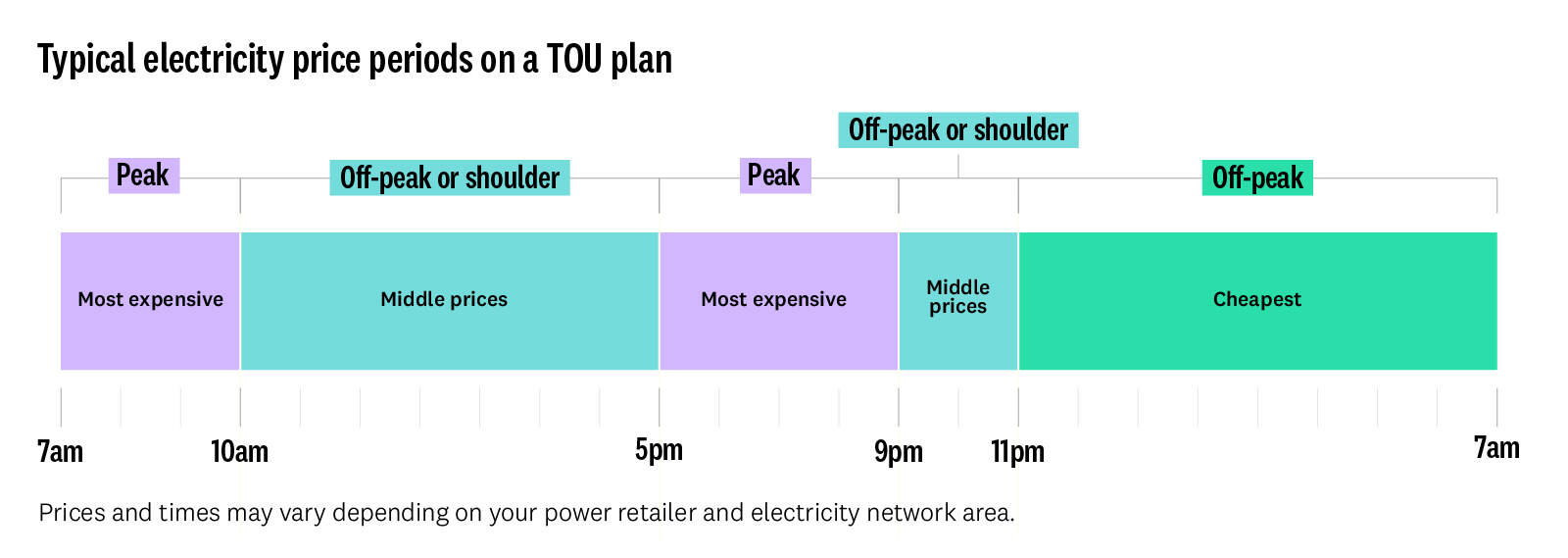
While the rates you’ll pay at different times depend on your power plan, these periods are often considered off-peak, as demand for electricity is lower:
- 10am to 5pm, when many people are at work
- 9pm to 7am, when many households have finished cooking, heating and showering, and are asleep.
During off-peak times, both generating and buying electricity is often cheaper for energy companies, so power retailers can pass on savings by lowering their rates. The electricity networks are also less busy, so there’s more capacity to carry power without needing to pay for upgrades.
Off-peak times can vary depending on your power retailer and electricity network area, so check the details of any TOU plan you look into.
In reality, peak demand varies a lot among local areas depending on who the big energy users are, what they are doing at different times and other factors, like the age of the network and its maintenance needs. These local, dynamic factors aren’t yet reflected in power pricing options for households — but they may be in future.
Good to know
Many EV owners opt for a TOU plan so they can charge their cars at lower overnight or weekend rates.
View Consumer’s guide to charging an EV for less(external link)
Homes with solar panels and batteries can also make use of cheaper off-peak rates to charge batteries from the power grid at night, as well as in the middle of the day when the sun is powering their panels. This low-cost power can be used later (for example in the evenings).
Use devices to control your electricity use
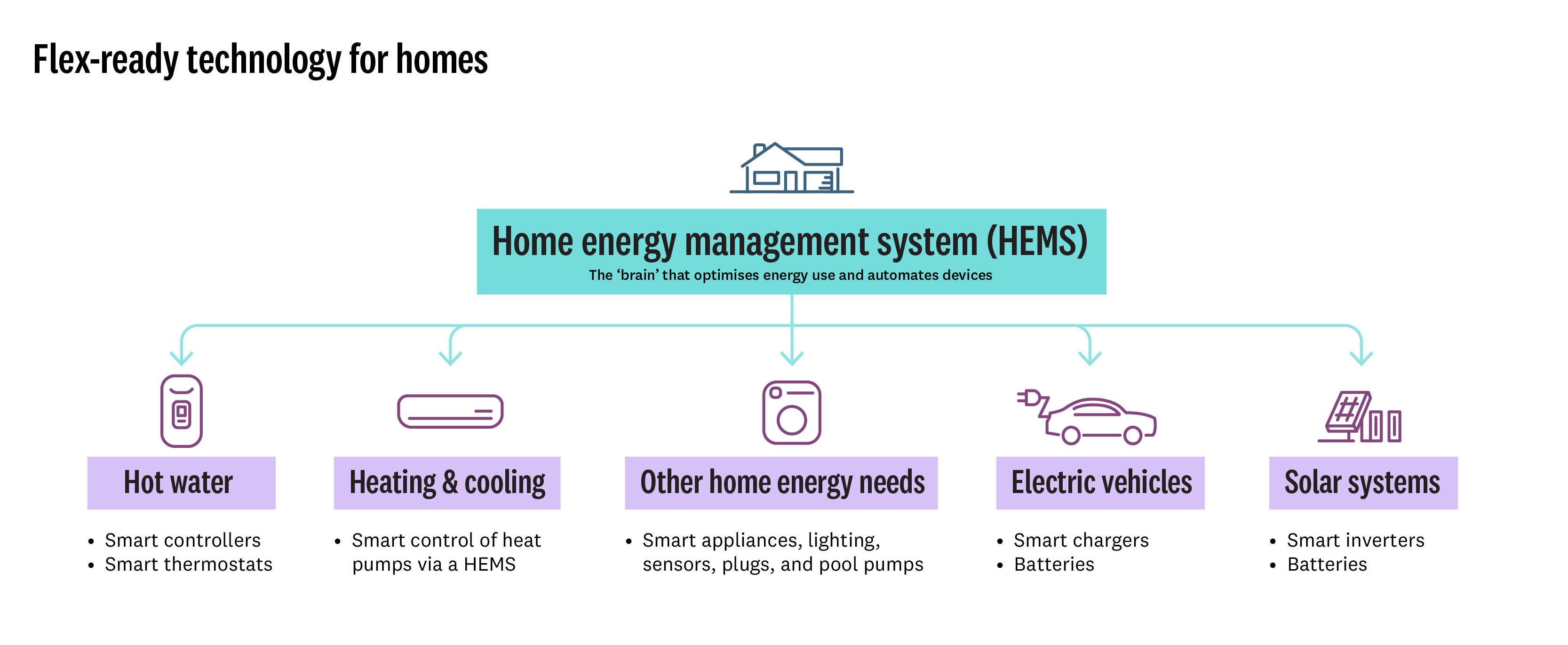
Taking advantage of new technology like home energy management systems (HEMS) and flex-ready appliances can save you money on your power bills now by ensuring you only use the power you need — when you need it.
Some appliances come with ‘smart’ controls built in, while others can be retrofitted with low-cost controllers, managed via smart plugs, or controlled by a HEMS.
While you can currently only get cheaper power off peak by being on a TOU plan, many of these devices also improve your home’s energy efficiency by ensuring you only use electricity when you need to. That means they can help you save money by using less power, even if you’re not on a TOU plan.
Where to find the most savings: Hot water makes up around one third of most household power usage and heating another third, so these are top targets for cutting your costs.
Which devices are flex-ready?
While there are many options for controlling your usage, not all devices are capable of two-way communication with the electricity grid. The following diagram shows those that that can be flex-ready (though it pays to check with the retailer before you buy).
Our work to unlock the potential of flexible electricity
We’re using a mixture of research, regulation and independent advice to households and businesses to help unlock the potential of flexibility and save electricity users money.