

Learn how to get the best return on investment from your solar system, and maintain your system, so it can power your farm well into the future.
Make sure your power plan still works for you
The power plan you’re on can make a big difference to the value you get from your solar system. It affects what you pay when you need to buy electricity, and what you’re paid for any power you send back to the grid.
Because there are so many rural plans and electricity supply arrangements, there’s no single ‘right’ option that suits everyone using solar.
Shift electricity use to the daytime
To maximise your solar power, use as much of your everyday electricity while the sun is out and your system is generating power. That might mean changing the way you work, but automation can help.
-
Run high-loads in daylight
Schedule energy-intensive tasks such as irrigation, pumping, cooling, drying, or processing when solar output is available.
-
Automate start times
Use timers, controllers, or smart meters to start pumps, heaters or compressors automatically once solar generation begins.
-
Use process storage
Store energy indirectly by heating water, chilling tanks, or pre-cooling systems during the day.
-
Avoid spikes
Reduce short-term spikes by staggering equipment starts or using variable-speed drives (VSDs) on pumps and fans.
-
Switch to electric
Replacing diesel or gas equipment and vehicles with electric alternatives can improve solar performance.
-
Use an energy management system
This helps to automate buying, selling and storing electricity based on your solar generation and energy use.
Monitor system performance
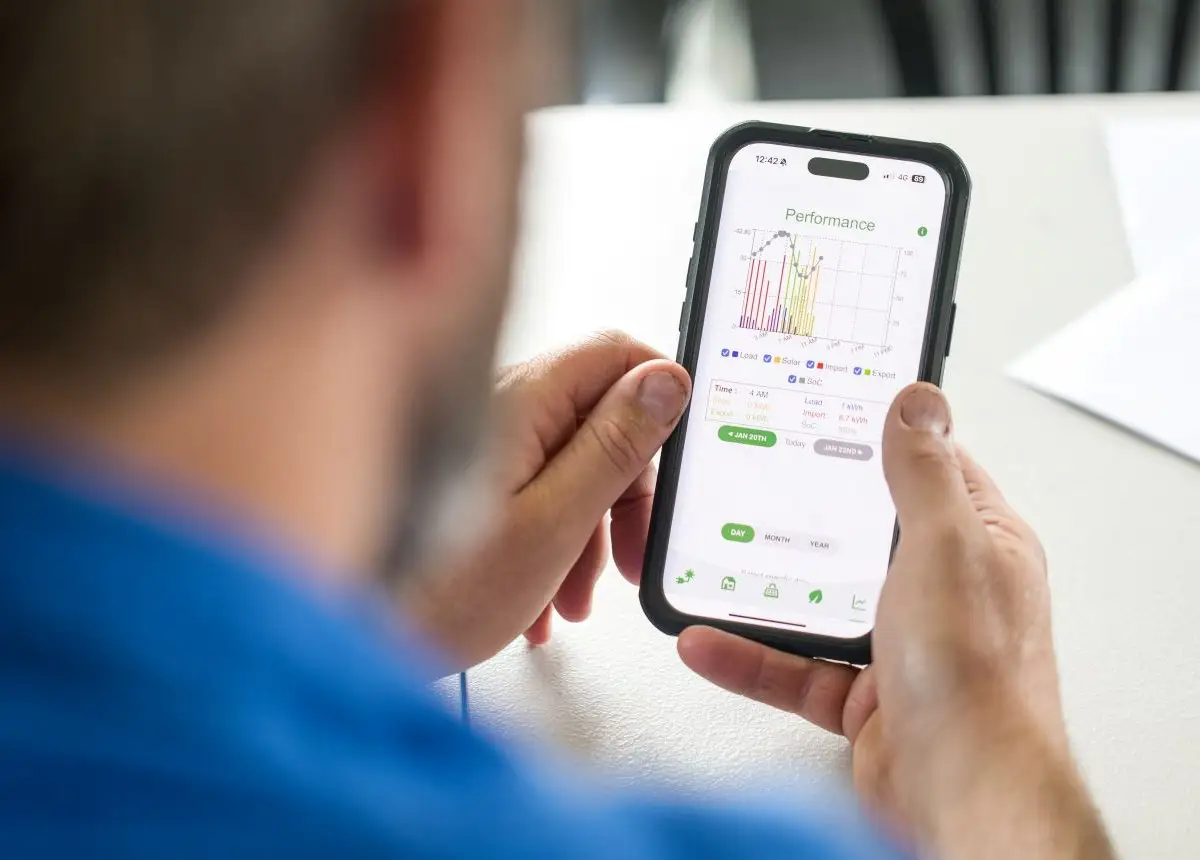
Once your solar system is operating, it’s important to keep an eye on how it’s performing. This helps to confirm that it’s working as expected and can highlight opportunities to further improve how you use it.
Ongoing monitoring also makes it easier to spot faults or maintenance issues early, before they affect output. Use an app to see what’s happening — it may come with your system or be an extra that you pay for.
Systems without battery storage
Monitoring is relatively simple. You’re mainly checking how much solar power is being generated and how that aligns with your electricity use and bills.
This can usually be done through the monitoring system and by paying attention to how much electricity you are still buying from the grid on your power bills.
Systems with batteries
Monitoring provides more detailed visibility. You can see:
- how much energy is generated by the solar system
- how much is stored in the battery
- when stored energy is used
- how much electricity is being imported from, or exported to, the grid.
Regardless of whether you have a battery or not, paying attention to your energy use is always worthwhile. Many farmers and growers find that once they start checking system data, they become more aware of how electricity is used on the farm and begin identifying further opportunities to reduce costs.
Care for your solar panels
While they should work well for 25–30 years, it’s a good idea to look after your panels to maximise their life expectancy and keep them performing at their best. Rural environments can be harsher than residential settings, so regular checks are worthwhile.
Clean to remove dirt and debris
Cleaning panels once a year is often sufficient, particularly where rainfall helps keep panels clear. More frequent cleaning may be needed if panels are exposed to:
- dust from yards or tracks
- pollen, leaves, or bird droppings
- coastal salt spray.
In these cases, cleaning every 3-6 months may be appropriate.
Method:
- Wash your panels with a brush and plain water or a tiny bit of detergent if grime is stuck.
- Do not use hot water, pressure washers, abrasive brushes, or steel wool, as these can damage the panels.
- If panels are roof-mounted, elevated, or difficult to access, engage a contractor to clean them safely.
Inspect the system
Inspect panels and mounting for obvious issues, particularly after storms or strong winds. Check for:
- cracks or damage to panels
- loose mounting hardware
- signs of impact from debris or stock.
Keep shade at bay
Trim trees or vegetation that shade panels, particularly during the middle of the day when solar output is highest. Even partial shading can noticeably reduce performance.
Check fencing and access
For ground-mounted systems, check that any fences and barriers are intact.
Upgrading your system after installation
Many farms build on their solar system over time as operations change or electricity use increases.
If you make an upgrade, keep monitoring how electricity is used to make sure the extra capacity is being absorbed on site and not mostly exported.
Common upgrades to solar installations
End of system life
Solar panels gradually produce less electricity over time but often continue operating for 25-30 years.
Toward the end of their life:
- output may decline
- inverters or components may need replacement
- panels can be removed and recycled.
Keeping records of the system’s age and performance helps with planning for a replacement or upgrade when the time comes.
Next step
-
Solar helpline for farmers
We offer a dedicated solar helpline for farmers and growers, providing independent, practical guidance to help you make informed decisions.
Call the team on 0800 300 643, or email us at solar@eeca.govt.nz