

Solar gives farmers and growers more control over how energy is produced and used on-farm, helping manage costs immediately, while strengthening resilience long term. Work out if solar is right for you and learn the key steps — from planning your system to getting the most out of it.
Solar saves money and boosts resilience
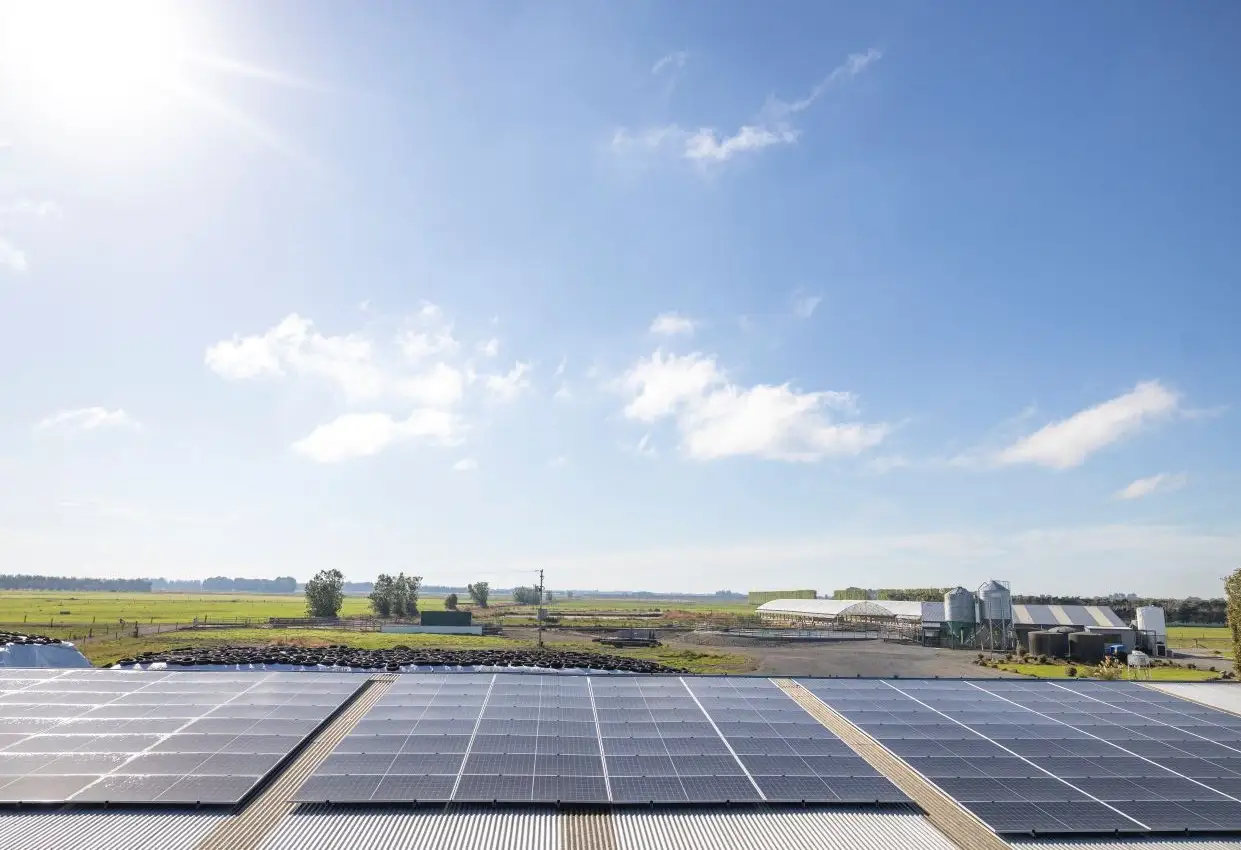
Solar and batteries can help cut operational energy costs, future-proof against outages and rising energy costs, and build long-term energy security.
A new on-farm solar system can pay for itself in as little as 4 years — and deliver your business free energy for the rest of its 25-year lifespan. Large systems and systems that include batteries will likely have a longer payback period.
Steps to installing solar on your farm
-
1.
Assess if solar is right for your farm
Start your farm’s solar journey by considering a few key factors.
-
2.
Understand typical investment and savings
Find out whether solar fits into your budget and how much you could save.
-
3.
Plan your on-farm solar system
Get an idea of what type of setup would suit your farm.
-
4.
Start the installation process
Start sourcing and comparing quotes and learn what installation involves.
-
5.
Optimise your operation for solar
Learn how to work well with solar and get the full benefits.
On-farm solar checklist
Solar can work well on Kiwi farms of all types and sizes, no matter the location. Answer the following questions to help decide if solar is a good choice for your operation.
Your farm
- What type of farm do you have?
Solar can work across almost every farm system — dairy, livestock, horticulture and plant nurseries. If you receive electricity bills, chances are solar can help reduce your energy spend.
- Do you get enough sun?
Solar works well across New Zealand, even on cloudy days. Sunshine hours vary north to south and east to west, and coastal farms may face some additional corrosion, but none of these factors rule out solar. Systems can be designed to suit local conditions. - Do you have room for the panels?
Solar panels can be installed on buildings or can be ground mounted. System size determines space requirements — from around 150 m² for smaller systems or up to 1,000 m² or more for larger systems.
- Is your roof in good condition?
If you’re considering a roof-mounted system and the roof is likely to need major repairs or replacement within the next 10 years, it’s usually best to do that first to avoid the cost of removing and reinstalling the panels later.
- Do you want to continue operating during power outages?
If so, a solar array on its own may not keep your farm running during an outage. To provide backup power you will need a battery.
Your farm’s energy use
- Do you have high annual electricity costs?
Farms that are large energy users typically see the strongest returns, but all farmers and growers can benefit.
- Do you run a lot of electric equipment?
Solar can power dairy sheds, irrigation systems, fans, pumps, refrigeration, lighting, heating, and processing equipment — anything with electrical demand. The more electrified your farm is, the greater the potential benefit.
- Do you use power mainly during the day?
Solar has the biggest payoff during daytime hours, and shifting flexible tasks to daytime can further increase its benefit. If you do need to use power outside of daylight hours, it can be worthwhile investing in a battery.
- Is your electricity use steady or seasonal?
Highly seasonal loads (for example during irrigation or harvesting) can still suit solar, but oversizing a system to meet short peak demands will reduce your payback and return on investment. It’s best to discuss this with your installer. - Do you have any electric vehicles?
EVs, ATVs and side-by-sides that can charge from your solar system can mean you benefit more from solar, though they’re not essential.
Your farm setup
- Do you own the buildings and meter where solar would be installed?
If the site is leased or shared, it’s important to clarify who pays for the system and who benefits from the savings.
- Is your main switchboard and ICP close to where solar would be installed?
It’s simpler and cheaper to install solar close to your main switchboard and electricity connection (ICP), as longer cable runs and trenching add to installation cost. - Do you have more than one ICP?
Many farms have multiple ICPs supplying different buildings or circuits. A solar system connects to a single ICP, which means only the electricity used by that ICP can be offset by the system. It may be worth adjusting your wiring to increase the load on the ICP where the solar will be installed.
Your future business plans
- Are you staying on the farm long term?
Solar is a long-term investment. Staying put increases the chance you’ll realise the full financial benefit.
- Are you planning any major improvements?
Work that affects your roof, the ground where solar might go, or your electrical system, is best done before installing solar - and designed with future solar in mind.
- Do you plan to electrify more equipment?
If you expect to add electric vehicles, irrigation pumps, or other electric machinery, solar can help manage future energy costs and support the transition.
Your financial expectations
- What are your payback expectations?
Returns from solar vary by farm and are best when most energy is used on-site. You need to be comfortable with upfront capital spend and waiting several years for payback, in exchange for long-term, more predictable savings.
- Can your cashflow support the investment?
Even where payback is attractive, timing matters. Consider whether your cashflow can absorb the upfront cost without creating pressure elsewhere in the business.
- Will you need a battery?
While a battery is a significant additional investment, it will improve resilience and increase on-site use of solar energy by enabling you to store it. So, deciding whether to include a battery is a key decision to be made. Even with a battery, most farm systems remain grid-connected — exporting excess power or drawing from the grid when needed.
- Will it make you money?
Solar is generally a cost-reduction investment rather than a reliable income stream, as export payments are often lower than retail purchase prices, and export limits apply. System return is best when most energy is used on-site.
Is solar ticking the boxes?
If you’ve been through the checklist and found solar is looking like a good business decision, the next step will help you figure out if it’s financially viable for your farm or growing operation.
You’ll also find support for every step of the journey, and information on how to make the most of your system once its in place on your farm.
Next step
-
Solar looks like a good move?
Learn about benchmark pricing, operational cost savings, plus options for financing solar.
-
Solar helpline for farmers
We offer a dedicated solar helpline for farmers and growers, providing independent, practical guidance to help you make informed decisions.
Call the team on 0800 300 643, or email us at solar@eeca.govt.nz