

The cost of solar technology has come down in recent years, making it a more affordable investment than ever. Find out what costs to expect and how solar can reduce your operating costs.
How much does solar cost?
On-farm solar system costs vary considerably depending on the size of the system and the complexity of the installation. The final price will depend on factors such as:
-
System size (kWp)
Small systems (around 20 kWp) start from $30,000, and large systems (around 200 kWp) can cost in the range $250,000- $300,000, (excluding GST).1
-
Battery (kWh)
A system will cost more with a battery. Batteries range from $700/kWh to around $1200/kWh installed (excluding GST).1
-
Electricity supply
Any changes to existing on-farm wiring, meters and switchboards, or line upgrades for electricity export, will add to your cost.
-
Accessibility
The distance and travel time for installers may well impact costs in particularly remote locations, as well as site-access for the installation.
-
Site preparation
There may be costs associated with non-electrical work (some of which you may be able to handle yourself).
-
Location of install
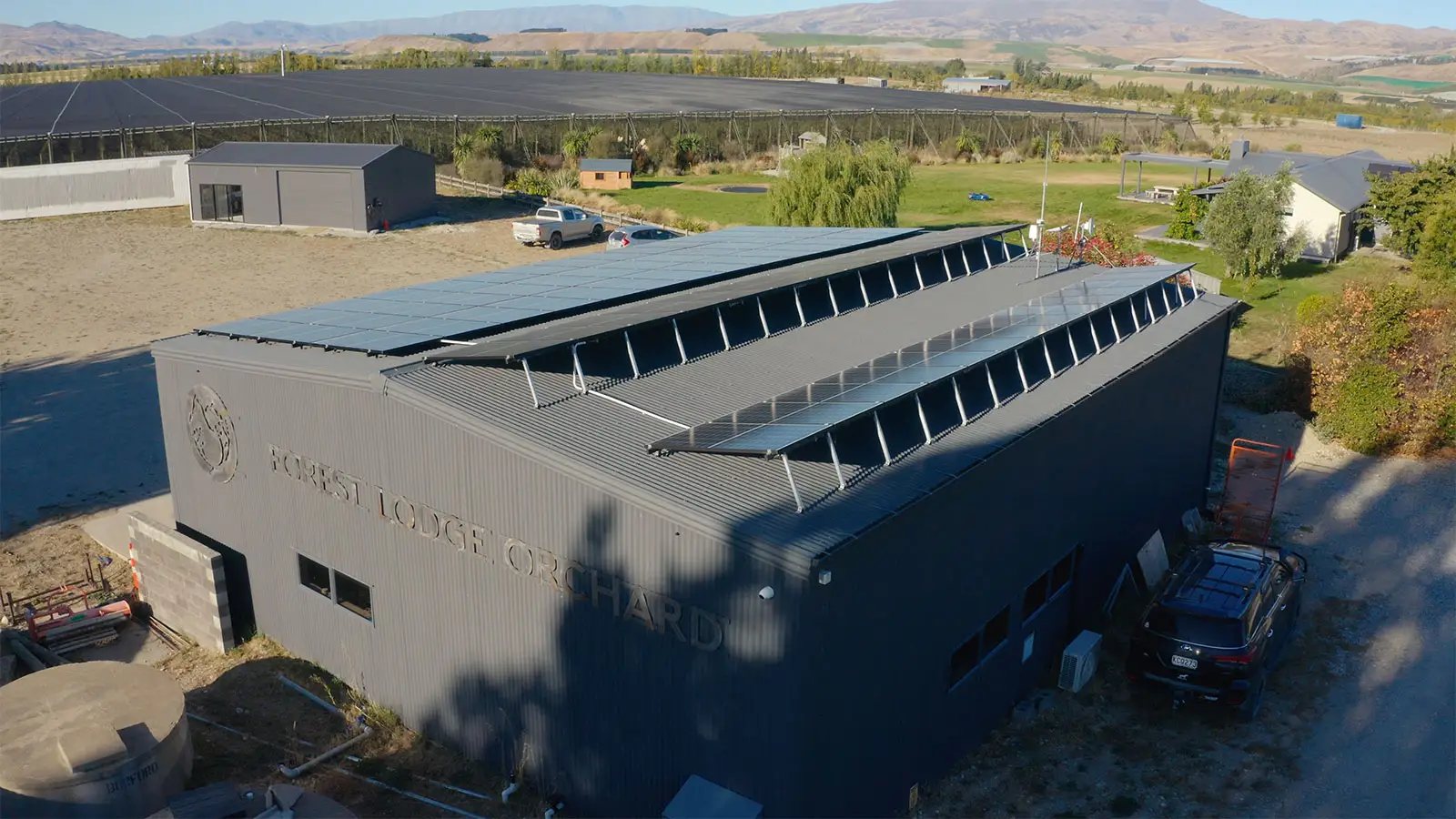
The cost will depend on whether your system is roof-mounted or ground-mounted.
Does a battery make sense?
If resilience and long-term energy security are something you want to improve with solar, a battery is an important feature for your system because it reduces reliance on the grid — especially in power outages. A battery isn’t essential, and can be added to your system later.
How solar saves your business money
Solar reduces electricity costs by replacing grid power with electricity generated on site. Savings depend on how much electricity you use, when you use it, and how well solar generation aligns with your usage.
Using the electricity you generate
The more solar electricity you use on site, the less electricity you need to buy from the grid. This is where most of the value comes from for farms.
Make the most of on-farm solar
Selling back to the grid
Solar electricity you don’t use can be exported to the grid and credited to your power bill. Export limits may apply.
Export rates are usually lower than the price you pay to buy electricity, but can still help offset costs.
Solar installation ‘payback’
The ‘payback period’ is the time it takes for the savings on your electricity bills to pay back the upfront cost of installing solar.
Financing your on-farm solar installation
How you finance a solar system has a direct impact on its financial performance. If purchasing a system outright is not an option, there are financing options available.
In general, higher interest costs extend payback, while lower-cost finance improves returns.
Using existing lending arrangements can simplify approvals and reduce costs.
Check what your bank offers
Start by speaking with your accountant or bank about financing options that may apply to your operation. This might include:
- green or sustainability-linked loans
- equipment finance
- loan top-ups or refinancing within existing facilities.
Ask about green finance options
Many New Zealand banks offer green loans or preferential rates for renewable energy and efficiency projects, including solar.
For farmers and growers, there can be zero interest (or very low interest) green loan options available on top of a mortgage or business loan. This type of loan can often be paid off well before the warrantied lifespan of your solar panels.
Make sure you understand the terms and conditions of any finance provider and get independent advice when needed.
Next step
-
Plan the right system for your farm
Work out the best system size, setup, and location for your operation.
-
Solar helpline for farmers
We offer a dedicated solar helpline for farmers and growers, providing independent, practical guidance to help you make informed decisions.
Call the team on 0800 300 643, or email us at solar@eeca.govt.nz