

Good planning helps to ensure that the system you choose matches how electricity is used on your farm, and that you get the best return on your investment.
Key things to consider
Your farm’s solar system should factor in how much electricity you use, where the system can be located, your budget, and how your operation may change over time.
-
Energy use
Start with your farm’s current annual energy use and consider future changes.
-
Install location
Key factors include available sun, orientation, shading, access, and the condition of existing structures.
-
Electrical setup
Make sure your solar system aligns correctly with your on-farm electrical connections and phasing.
-
System design
Think about what you want the system to achieve and how much you’re prepared to invest.
System size should match your energy use
It’s best to size a solar system based on how much electricity you normally use, while also allowing for any likely changes in the future.
-
Current usage
Your electricity bills show the total monthly or annual use for each ICP (Individual Control Point), but system size is more strongly informed by how much electricity is used during the day. Solar systems only generate power during daylight hours, so daytime demand is what determines how much solar can be used effectively on site, unless you opt for a battery.
-
Future needs
Consider whether your electricity use is likely to increase over time. This could include electrifying equipment or processes, upgrading to more powerful technology, operating for longer hours, or expanding irrigation, cooling, or processing.
Allowing for realistic future growth can help avoid under sizing a system.
Common questions about system size
System location
Where you put your solar panels can affect how much electricity they generate, and how much the system costs to install.
For farmers and growers, there are two main options: roof-mounted systems or ground-mounted systems. Each has different advantages and constraints.
Roof-mounted systems
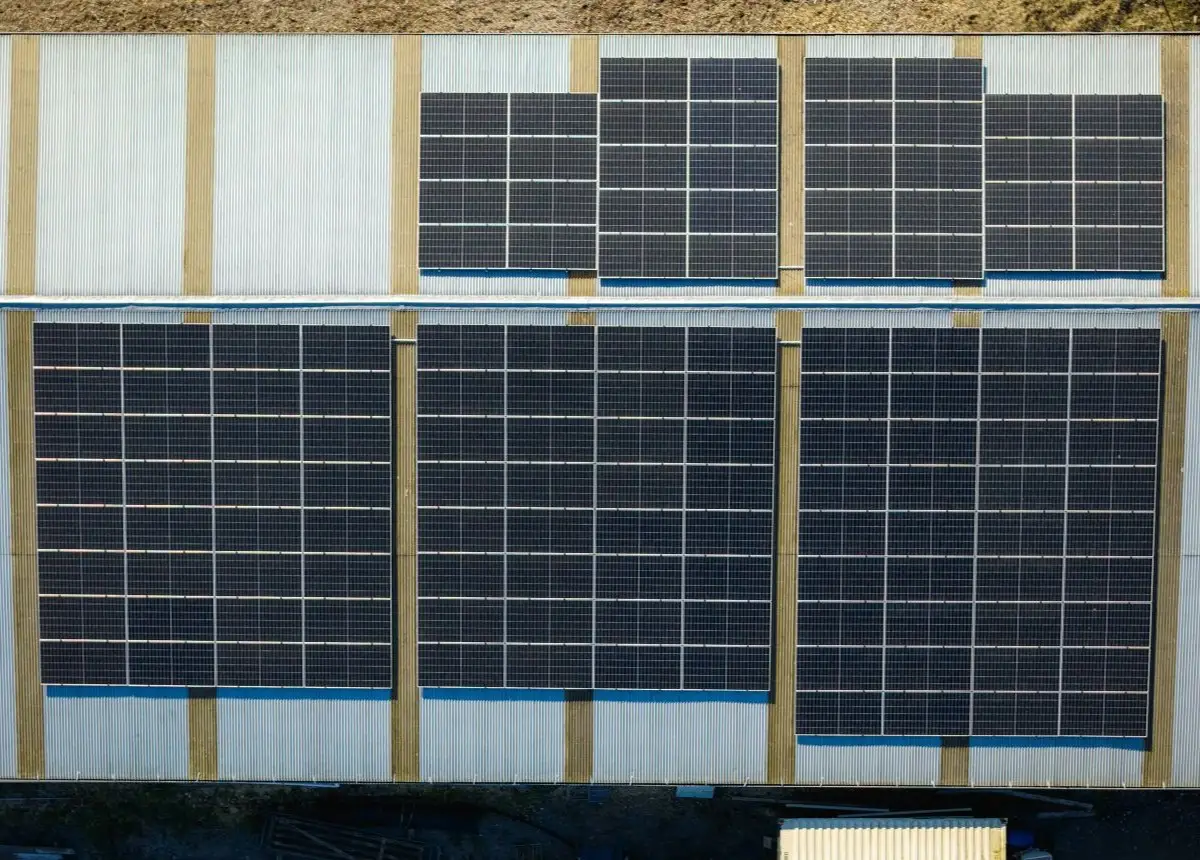
Roof-mounted systems can be installed on barns, sheds, and storage buildings, but the roof’s condition matters.
Panels are typically in place for 25-30 years, so if a roof is likely to need replacement or major maintenance within that time, it’s often better to address this first to avoid having to remove and reinstall the system later.
Ground-mounted systems
Ground-mounted systems are useful where roof space is limited, poorly oriented, or unsuitable. They are common on larger sites with available land and clear access, as well as for larger systems.
They allow more flexibility in panel direction and tilt, but usually require additional framing and civil work, which can increase costs. In farm environments, they should be located away from vehicle movements and stock, and fencing will be needed to prevent damage and restrict access (for safety).
Factors to consider for system location
Your electricity setup
Electricity connections (ICPs)
Many farms have more than one electricity connection (ICP) supplying different buildings or circuits.
A solar system is usually connected to one ICP, which means it will only offset electricity used on that connection. If you want solar to supply buildings or equipment currently on other ICPs, electrical changes may be needed to combine or reconfigure circuits.
It’s important to understand which ICPs supply which loads, and to be clear about this before moving ahead.
Three-phase power
Many farms use three-phase power, where electricity is supplied across three separate phases.
In New Zealand, each phase is metered separately. This means solar exporting on one phase does not automatically offset electricity being used on another phase at the same time.
Understanding which loads sit on which phase helps ensure the system is set up to make the best use of the solar power being generated.
Your system setup
The essential parts of a solar system are the panels and an inverter, while a battery is optional but helps considerably with resilience and energy security, and operating outside of daylight hours.
Solar panels
Solar photovoltaic (PV) panels convert sunlight into direct current (DC) electricity that can be converted by an inverter into alternating current (AC) electricity to be used on your farm.
Many panels are modular, so systems can be scaled up or down by adding more panels, depending on available space and electricity demand.
Common questions about solar panels
Inverter
The inverter turns the direct current (DC) electricity generated by solar panels into alternating current (AC) electricity that can be used in farm equipment and buildings.
A high-quality inverter will get more power from your solar system, help you monitor your power use (usually through an online portal or app), improve electrical safety, and last longer.
Common questions about inverters
Battery
A battery allows electricity generated during the day to be stored and used later, such as overnight or when the grid is down during outages.
A battery is best considered where a large share of electricity use occurs outside daylight hours, loads cannot be shifted, or resilience and backup power are priorities.
Common questions about batteries
Does a battery make sense?
When a battery is beneficial
- A large share of electricity use occurs outside daylight hours.
- Backup power for business continuity in outages is important.
- Increasing energy security is a priority.
When a battery is not cost effective
- Most electricity is already used during the day.
- Overall electricity use is low.
- You want the fastest possible payback - batteries typically extend the payback period.
Case study
Fairbank farms
When the power goes out on this Southland farm, the milking doesn’t stop.
Find out more about their solar and battery system, the resilience benefits it offers their farming operation, and what they’ve learned along the way.
Timers and load-control devices
Timers, load controllers, and diverters can be simple, low-cost ways to improve solar use.
For example, electric hot water systems, pumps, or process loads can be scheduled to run during daylight hours so more solar power is used on site. These options are often cheaper than batteries and can significantly improve system performance.
Off-grid systems
For most farms, remaining grid-connected is much more cost-effective and reliable than going off-grid.
Off-grid systems rely entirely on solar, batteries, and often backup generators. They require much larger systems and higher upfront costs, and are usually only sensible where grid connection is unavailable or prohibitively expensive.
Next step
-
Ready to get an install underway?
Find out how to source and compare quotes, and what installation looks like.
-
Solar helpline for farmers
We offer a dedicated solar helpline for farmers and growers, providing independent, practical guidance to help you make informed decisions.
Call the team on 0800 300 643, or email us at solar@eeca.govt.nz