

Simple fuel-saving actions

Even small improvements in fuel efficiency can translate into big savings across a year, especially at current prices.

  • Calculate your fuel savings

    Consistently applying all the actions on this page can lead to fuel savings of between 5–15%.  

    Savings calculator

  • Check vehicles before travelling

    Well-maintained vehicles use fuel more economically, so these easy checks will help to cut down fuel costs. 

    Vehicle checklist

  • Drive efficiently to conserve fuel

    If your drivers fully adopt these fuel-efficient habits, you should see a noticeable drop in fuel spending.  

    Efficient driving checklist

Calculate fuel savings

Small changes to driving habits can save you money right away, and add up to much larger savings over the course of a year.

Check vehicles before travelling

VEHICLE CHECKLIST

  • Check tyre pressure

    Underinflated tyres increase fuel use. Even small drops in pressure can have a noticeable impact — about 1% for every 5–10 psi depending on the vehicle.1 

    It’s best to check your tyres when they’re cold or nearly cold.  

    Many newer vehicles have tyre pressure monitoring systems. If yours doesn’t, check your tyres at least monthly, and consider adding a ‘mallet check’ to your daily pre-drive checklist.

  • Keep wheels aligned

    Misaligned wheels increase drag and fuel use. Watch for uneven tyre wear, especially along the edges, and check trailer tyres as well as the main vehicle.

  • Cover trucks, trays, and trailer

    Cover empty tipper trucks with a tarp when on the road to gain 8% greater fuel economy when driving at 90 km/h.2

    Covering ute trays and trailers, even if when empty, can improve fuel efficiency at higher speeds.

  • Use low rolling resistance tyres

    For heavy vehicles, having a complete set of the latest low rolling resistance tyres can improve fuel economy in linehaul work by up to 6%.3

  • Avoid excessive warm-up time

    Modern engines don’t need long warm-up periods. Avoid idling while doing vehicle checks and documentation.

  • Improve aerodynamics 

    For heavy vehicles, cab roof deflectors and fairings can reduce drag and lead to 1.2–2.4% fuel savings.4 

    For lighter vehicles, roof racks and external fittings also increase drag — remove them when not needed to improve efficiency. 

  • Encourage daily walk arounds

    Share these visual, walk-around inspection guides with your drivers. Look for any damage to the body or curtain, or any flat or worn tyres.

    Truck maintenance checklist (external link) 

    Bus maintenance checklist(external link)

Many of the ways to improve fuel efficiency and safety are the same — managing speed, anticipating the situation ahead, reducing aggressive driving, checking tyre pressures, vehicle maintenance and reducing the amount of travel.

New Zealand transport industry research
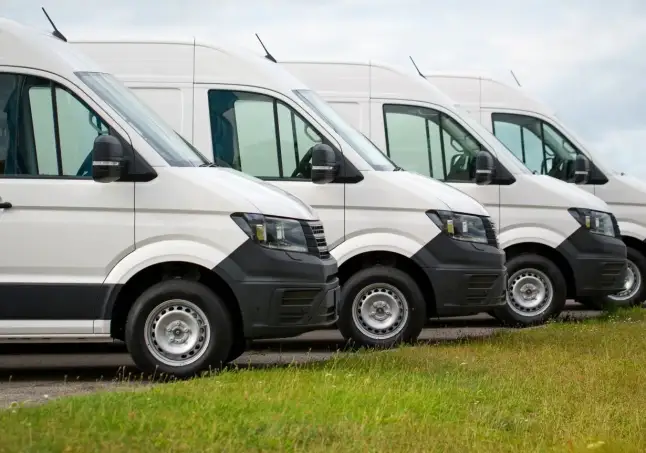
Drive efficiently to conserve fuel

EFFICIENT DRIVING CHECKLIST

  • Drive steadily

    Speeding up suddenly and braking frequently both increase fuel use. Instead, look ahead to anticipate slowing, and move with the traffic flow. If you’re on the highway, use cruise control to maintain a steady speed and avoid unnecessary acceleration.  

    Smooth and steady driving can save 10% on fuel.5

  • Reduce idling and switch off when waiting

    Idling wastes fuel and adds unnecessary engine wear.

    For light vehicles (cars, vans and utes), switch off the engine if you’re stationary for more than 30 seconds. Where available, enable automatic stop-start systems — these can reduce fuel use by around 4–10% in urban, stop-start driving.6 

    For heavy vehicles, switch off to save fuel if parking for more than 3 minutes. A diesel-powered heavy vehicle uses 2 litres of fuel an hour when idling.7

  • Monitor and avoid peak traffic where possible

    Congestion increases fuel use through idling and stop-start driving.

  • Close windows at higher speeds

    Over 80 km/h, opening cab windows increases fuel use — air conditioning is more efficient.

  • Reduce unnecessary travel

    Not every trip needs to happen the way it always has. Encourage carpooling for staff travel, consider online meetings instead of in-person, and review whether trips can be combined or done differently.

Next step

Optimise fuel efficiency across your operation

How to waste less fuel, drive fewer unnecessary kilometres, and get more consistent performance across drivers and vehicles.