

Resilience actions
These steps involve planning and investment, but can significantly reduce your exposure to future fuel cost and supply risks.
-
Review fleet usage
Ongoing fleet optimisation can help ensure you’ve got the right vehicles and fleet size — identifying opportunities to reduce costs and fuel use.
-
Plan for vehicle replacements
Now is a good time to look at your options, from electric, hydrogen and hybrid vehicles to more efficient heavy vehicles, cars and utes.
Review how your fleet is used
Start by taking a closer look at how your vehicles are actually operating.
- Do you need every vehicle in your fleet?
- Are some underutilised or doing work that could be combined?
- Are the right vehicles being used for the right tasks?
Consider engaging a professional to undertake a fleet audit, looking at utilisation, fleet composition, and opportunities for optimisation or alternative fuels.
-
50% co-funding to optimise your fleet and save fuel
This short-term co-funding pilot provides a professional analysis of your existing fleet and telematics data to identify fuel-saving and optimisation opportunities.
- Eligibility — If you’re a private sector business with 20 or more vehicles in your fleet and you’ve got telematics data available, you are eligible to apply for this co-funding. (Government organisations are ineligible.)
- Benefits — The insights from a fleet analysis can help reduce your fleet costs and increase the overall efficiency of your operation.
View co-funding pilot for fleet optimisation
Don't have telematics data?
Our co-funding for a fleet study might be a better fit. It can help you get the most out of your fleet and reduce fuel use.
Plan ahead for vehicle replacement
When it comes time to replace vehicles, it’s worth considering a wider range of options.
Zero- and low-emission vehicles
Battery electric, hydrogen, and hybrid vehicles are becoming more viable for a range of use cases, particularly for defined routes and urban operations.
Lead times can be significant, so early planning is important to ensure the right vehicles are available when you need them.
Heavy vehicles
National Road Carriers has a cost model calculator that can help you to assess long-distance freight options and understand lifetime costs. Just complete the free and quick sign-up to access the calculator.
Use the cost model calculator(external link)
Cars and vans
Use RightCar to compare energy economy, safety ratings and features, find the most efficient vehicle in your price range, and decide which vehicles are best for the job.
-
Going electric — work cars, vans and trucks
Electric work vehicles can drive energy and cost-efficiencies. Use our EV guide to understand whether they are a good fit for business and trade use, and how best to make the transition.
Explore electric work vehicles
To compare the cost of buying, running and on-selling new electric vehicles with hybrid, petrol or diesel alternatives, use our total cost of ownership calculator.
Do alternative vehicles make sense for your operation?
Vehicle technology has improved rapidly in recent years, with greater range, capability and more models available. It’s worth checking in with suppliers to understand what options now fit your operation.
Not every vehicle or route is currently suited to alternative fuels, but some are a strong fit.
- Urban and short-range routes are often well suited to electric vehicles.
- Predictable, repeatable routes make planning easier.
- High fuel-use vehicles can offer the greatest savings potential.
Trialling new technologies in a small part of your fleet can help build confidence and identify where they deliver value.
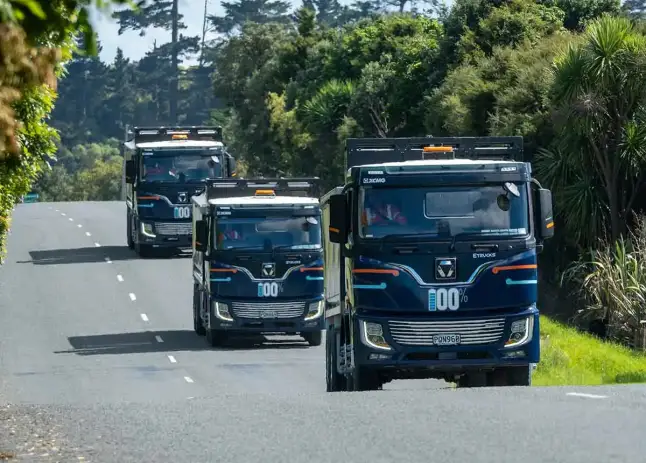
Access funding and support
Support is available to help reduce the upfront cost of low-emissions heavy vehicles.
EECA’s Low Emissions Heavy Vehicle Fund can cover up to 25% of the cost of a new vehicle or conversion to low- or zero-emission technology.
Related links
-
Find quick ways to save on fuel
Find quick actions for cutting fuel costs across a whole fleet, and calculate how much your operation can save from consistently applying best practice for fuel efficiency.
-
Optimise fuel efficiency across your operation
Follow proven industry practices for making fuel savings across your whole operation, whether it’s a freight, delivery or light vehicle fleet.