

Fuel-saving actions

  • Make every litre last longer

    Best-practice reminders for fuel-efficient driving habits that will cut your fuel bill. 

    Cut fuel use

  • Calculate your fuel savings

    See how much you could save by adopting more efficient driving habits.

    Calculate savings

  • Maintain for better fuel economy

    Vital maintenance checks to make fuel go further, and keep your truck on the road. 

    Optimise fuel economy

  • Plan for greater fuel efficiency

    Longer-term ways to set your business up for greater fuel savings and resilience.

    Plan ahead

Cut fuel use while on the job

Behind the wheel, you’re in full control of the fuel you're using. Now more than ever it’s worth doubling down on best practice for fuel-efficient driving.
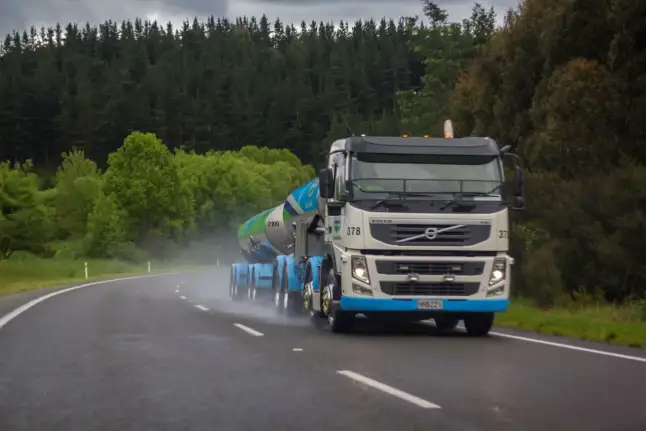
  • Steady as you go

    Save 10%

    You’ll burn more fuel if you accelerate hard and brake often. Anticipate the need to slow down, and move with the traffic flow to save up to 10% on fuel.2

    When you’re on the highway, use cruise control to help you maintain a steady speed. And if you’re driving a modern diesel truck, switch on economy mode to help fuel to go further, especially if your truck is empty.

  • Switch off when you’re waiting

    Save 5%

    When parking your truck for more than 3 minutes, switch off — idling wastes your fuel and adds to engine wear. If your truck runs on diesel, it’ll use 2 litres of fuel per hour while idling.4

  • Avoid traffic congestion whenever you can

    Being in a traffic jam means more idling and stop-start driving, and using up more fuel. Plan ahead or re-route to avoid congestion, so you can drive on steadily and limit gear changes. 

  • Close your windows at higher speeds

    Over 80 km/h, opening your cab windows will burn more fuel. Use air conditioning instead — it’s more efficient. 

Calculate fuel savings

Small changes to driving habits can save you money right away, and add up to much larger savings over the course of a year.

Maintain for optimal fuel economy

Keeping your truck well-maintained can cut your fuel use by 10–20%.5

Doing walk-around checks before you hit the road, along with in-depth monthly checks, and booking regular servicing will go a long way towards optimising your truck’s fuel economy.

  • Check tyre pressure

    Save 1% every 5-10 PSI

    For every 5–10 psi a tyre is underinflated, your fuel use goes up by 1%, so small pressure drops can quickly add up.6

    The New Zealand Trucking Association recommends checking pressure with a hammer at least weekly, along with using a quality tyre pressure gauge. 

  • Inspect tyre condition

    Look for signs that you need to replace tyres, like bulges, lumps or cuts. Tread depth matters too — once it’s below 3mm, tyre grip decreases more rapidly in wet weather.

  • Keep wheels aligned

    Misaligned wheels increase drag and fuel consumption. Watch for uneven tyre wear, especially along the edges. If you’re towing a trailer, check its wheels too.

    Find a member of the NZ Heavy Transport Wheel Aligners Association(external link)

  • Cover trucks, trays and trailers

    If your tipper truck is empty, cover it with a tarp to gain 8% greater fuel economy when driving at 90 km/h.7 

    Covering trays and trailers, whether full or empty, is also good for fuel efficiency at higher speeds.

Service trucks to manufacturers standards

Servicing to Original Equipment Manufacturers (OEMs) standards ensures critical components are maintained in optimal condition for fuel efficiency.

  • Follow OEM‑specified service intervals and procedures for engines, drivelines, brakes and emissions systems.
  • Use preventative maintenance to detect issues such as air, fuel or exhaust leaks before they increase fuel consumption.
  • Ensure engine tuning and calibration is done correctly, so that combustion is efficient.
  • Maintain manufacturer‑approved lubricants, oils and filters to minimise frictional losses.
  • Ensure after‑treatment systems are operating as intended to avoid excess fuel use during regeneration.

Improve efficiency 

While these actions might take a little longer to implement, they can add up to significant fuel savings in the long run, so they’re worth looking into. 

  • Be as aerodynamic as possible

    Save 1–3%

    As your truck picks up speed, it needs more energy to overcome drag. Here’s what you can do to reduce it.  

    • Mount a cab roof deflector so it passes over the front edge of the body or load. An adjustable deflector is best if your truck carries loads of different heights, or travels empty at times — 1.2–2.4% fuel savings.8 
    • Use fairings to direct air away from the side gaps between cabs and trailers. 
    • For a tipper truck, cover with a tarp when empty — 3% fuel savings.9  
    • With a flat-deck truck, place your load close to the cab.  
    • Remove any unnecessary accessories, like extra lights, bull bars, top bars or air horns as they affect air flow and fuel consumption.
  • Use low rolling resistance tyres

    Save 6% 

    When you’re replacing your tyres, ask your provider about fitting a set of low rolling resistance tyres — they can improve your truck’s fuel economy by up to 6%.10

  • Consider a tyre pressure monitoring system

    This type of system monitors your tyres in real time via sensors, catching any pressure drops as they happen and alerting you to the need to inflate. 

    Ask your tyre provider about these systems, and what might work best for your truck.

  • Refresh your fuel-efficient driving skills

    Even experienced drivers can benefit from a refresher on the driving practices that really make a difference to saving on fuel.  

    TR Group offer in-cab coaching carried out in your truck and on your routes to quickly spot any driving habits that are costing you money. 

    Save on fuel with TR Group's training(external link)

    Safe and Fuel Efficient Driving New Zealand (SAFED NZ) has a comprehensive 1-day driver course for heavy vehicle drivers that can lead to fuel savings of 5–10%.

    Find a SAFED NZ instructor(external link)

  • Consider telematics

    A telematics system gives insights into aspects of your driving like speed, fuel use and idle time. With that data, you can quickly adapt your driving habits to save more on fuel.

    To learn more about how telematics works, register for this webinar co-hosted by EECA (Energy Efficiency and Conservation Authority) and National Road Carriers.

    Get more efficiency from telematics(external link)

Look into electric or hydrogen trucks

Swapping to a truck that runs on electricity or an alternative fuel is a big investment, but the savings from lowering your ongoing running costs can pay off over the long term.  

Electricity is cheaper than diesel, so electric trucks cost a lot less to run and also need less maintenance.

  • Shifting from diesel to electric trucks

    South Auckland's Reliance Transport added the country's first 2 battery electric Scania trucks to its fleet in 2022.

    Compared with diesel trucks, the Scania trucks reduced energy costs by 75%, dropped maintenance costs by 30%, and lowered emissions by 91%.

    Reliance Transport case study

  • Proving the case for hydrogen fuel cell trucks

    With a high-power output and payload capacity, hydrogen fuel cell trucks can be used for freight, logistics, and construction.

    NZ Post trialled a Hyundai hydrogen truck, and found it could operate successfully in the New Zealand market, effectively replacing a diesel truck.

    NZ Post case study

  • EECA’s Low Emissions Heavy Vehicle Fund

    This fund provides grants of up to 25% of the purchase price of a new low or zero-emissions heavy vehicle, or 25% of the cost to convert an existing ICE heavy vehicle to be powered by approved low-emissions technologies.

    Learn more about LEHVF