


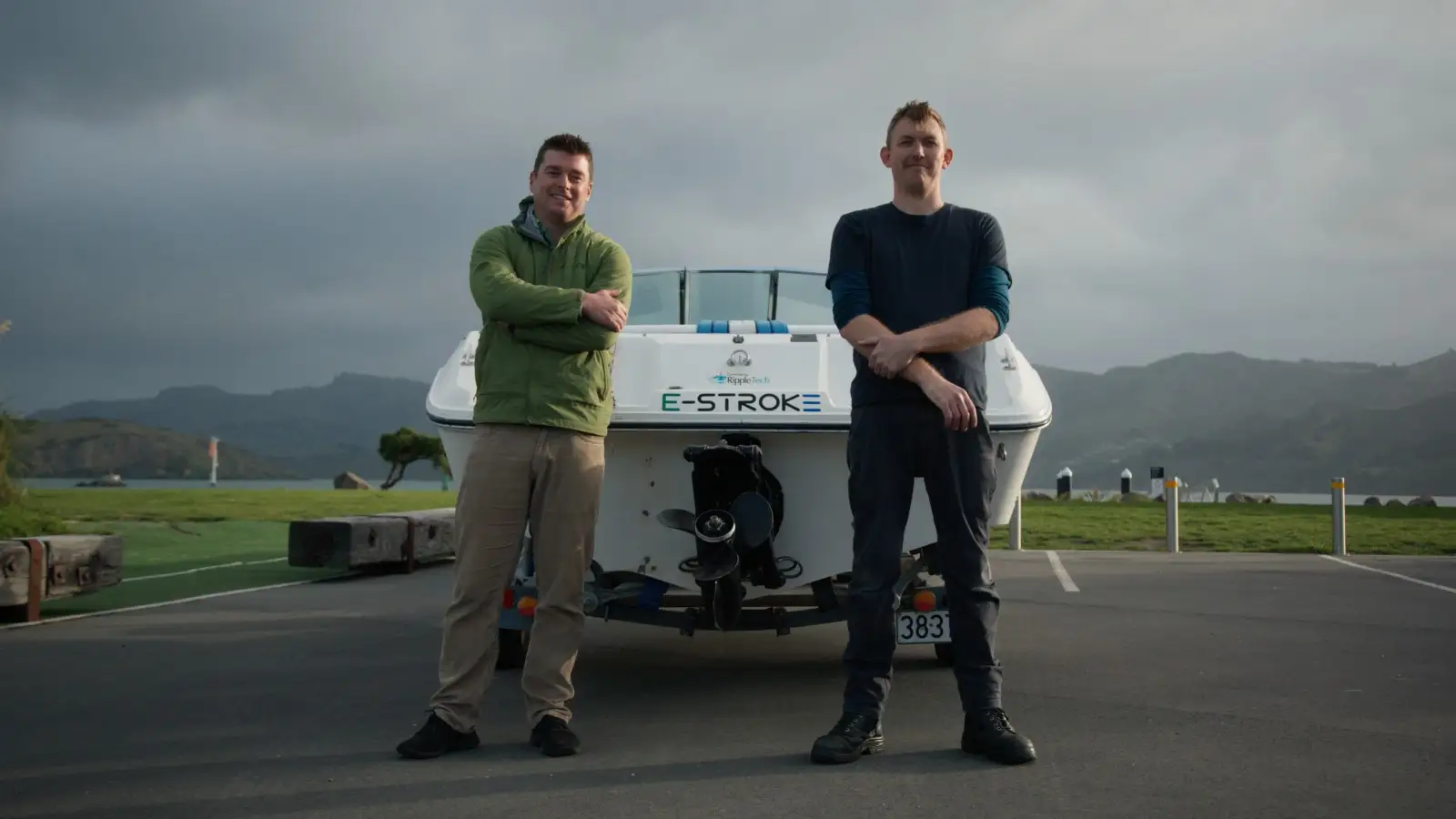
Keen water skiers Jeff and Michael Smit started E-Stroke to work on the challenge of electrifying recreational boats. They have proven it’s possible to convert a speedboat to run off battery power for roughly the same price as replacing a 4-stroke outboard.
Watch their video and read on to find out how they did it, how it stacks up against the petrol alternative and what they’ve learned along the way.
If we were to charge the e-boat from zero to fully charged with a 40kWh pack, that would be about $13, for a day’s use.
Lessons when considering electric: the E-Stroke story
The idea sprouted around a campfire at Glendhu Bay in Wanaka. After two weeks of waterskiing and biscuit towing, cousins Michael and Jeff Smit were convinced they could retrofit an electric outboard motor to their boat and shrink the family holiday fuel bill. After not finding a solution already on offer in New Zealand, the concept quickly evolved into a bigger vision: launching a startup to bring affordable electric conversions to the wider market.
The company received co-funding from EECA in 2024 to demonstrate the feasibility of marine conversions.
Electric boat performance: speed, torque, and surprising power
The cousins say that while people think that an electric boat won't necessarily perform as well as one that’s petrol powered, in truth it actually outperforms in many aspects.
“Anyone that's driven an EV versus an ICE will instantly recognise the initial torque and that power from the get-go, and it's a very similar thing in the boat,” says Michael.
Speed-wise, they’re seeing the same performance between the two boats, with no difference between the same-sized petrol outboard or inboard motor compared to the electric equivalent.
“The power of the boat has actually been quite surprising to us. We are nowhere near the max torque that we can actually run out of our motor, and it's still performing more than what we need it to.”
Rethinking range: how much power boats really use
A key commercial hurdle for E-Stroke is convincing people they don’t need as much range in a boat as they might think.
E-Stroke commercial lead Jeff says their testing data shows that for a typical family day out on the water, the boat is running on power about 25% of the time. The other 75% of the time, it’s idling — which on an electric boat isn’t drawing on power.
“Our trial boat has a 40 kilowatt hour battery pack that gives us about 40 minutes of run time. For a typical day that's about 2.5 to 3 hours by the time you consider sitting on the beach idling around picking the kids up from the biscuit or fooling around or waiting for the skier to get back in the boat after falling off."
They are currently building a 60 kilowatt hour pack, and could go up to an 80 kilowatt hour pack which would extend the run time, although this would come with trade-offs around weight and space.
The key advantages of electric boats over petrol engines
Electric boats are transforming the boating experience by offering quieter, cleaner, and more efficient alternatives to traditional petrol-powered engines.
- High performance and instant torque — Electric motors deliver maximum torque instantly, which helps boats get up on the plane faster and with less effort than internal combustion engines. This results in a smoother and more responsive ride, especially during acceleration.
- Cheaper to run — Electricity is significantly less expensive than petrol or diesel on a per-kilometre basis. Charging an electric boat typically costs a fraction of what you’d pay to refuel a conventional one.
- Cheaper to maintain — Electric motors have far fewer moving parts than combustion engines. That means less wear and tear, fewer things that can go wrong, and reduced maintenance costs over time.
- Quiet operation — Without the roar of a petrol engine it’s much easier to talk to others on the boat. Electric boats offer a peaceful and more enjoyable experience.
- Better for the environment — Electric boats produce zero engine emissions, helping to reduce air and water pollution. They also lower the risk of fuel or oil spills.
Building the right battery: lessons from E-Stroke’s e-boat conversion
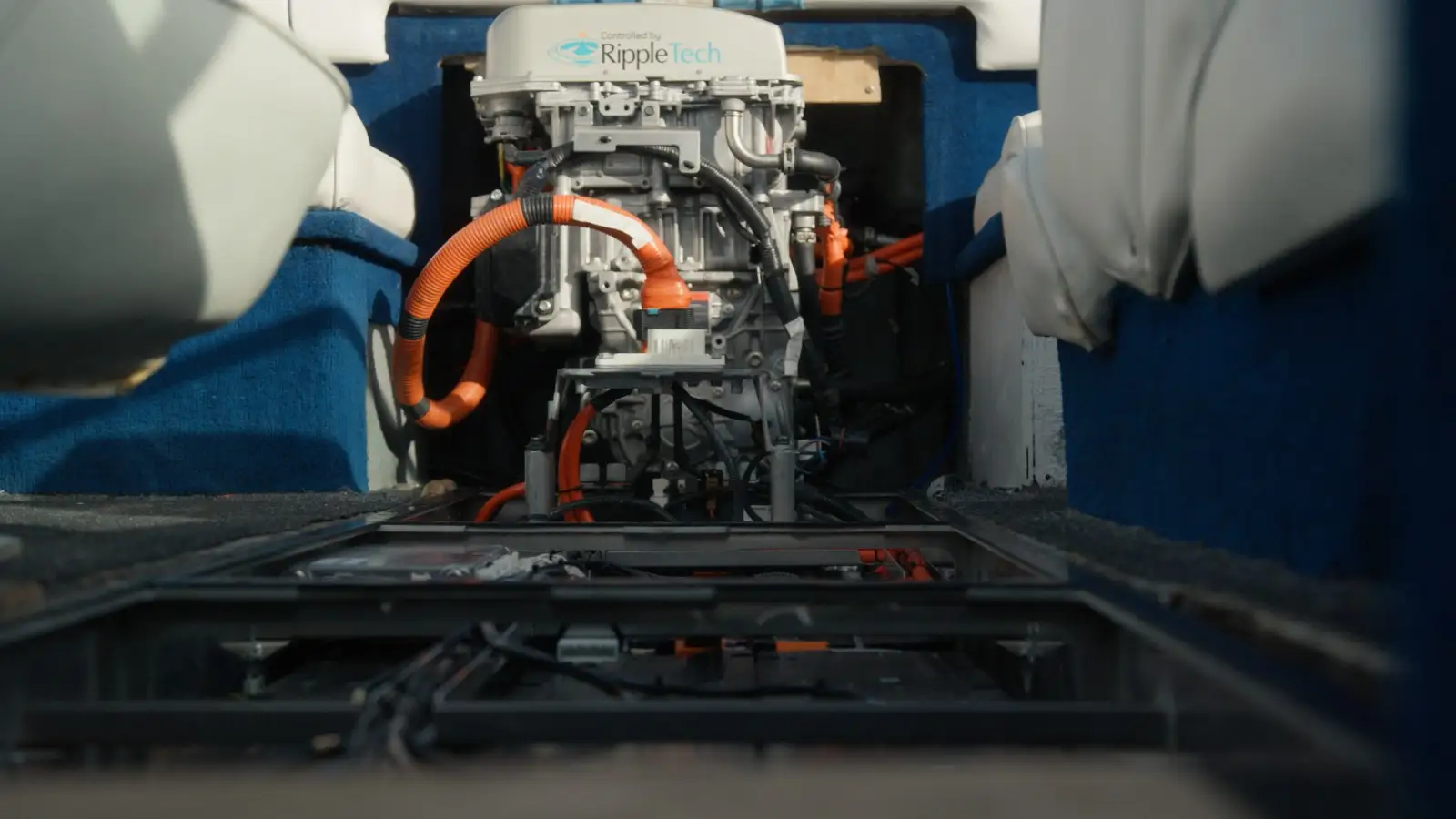
The initial plan was to use recycled Nissan Leaf parts in the conversion. While this worked out well for the majority of components in the battery management system, the E-Stroke team found that the Leaf batteries themselves didn’t have the capacity they needed.
Instead, they turned to a supplier in China, Halb Battery, that was able to custom build the batteries, configuring the cells to be ideal for the recreational boats.
Solving the puzzle of electric boat battery placement
For one of the conversions, they were able to fit the battery pack in by removing the fuel tank, cutting into the ski locker, and putting the batteries up the centre of the boat.
“There's not one boat that's the same as the other,” says Michael. “So options for different form factors on batteries and potentially splitting the packs up is a challenge we have moving forward."
“We've done a stern drive — so an inboard — and an outboard. They both have different challenges with them. The outboard was by far the harder option. But we see it as the best option when it comes to a kit point of view.”
The vision for conversion kits: standardised, affordable, electric outboard motors
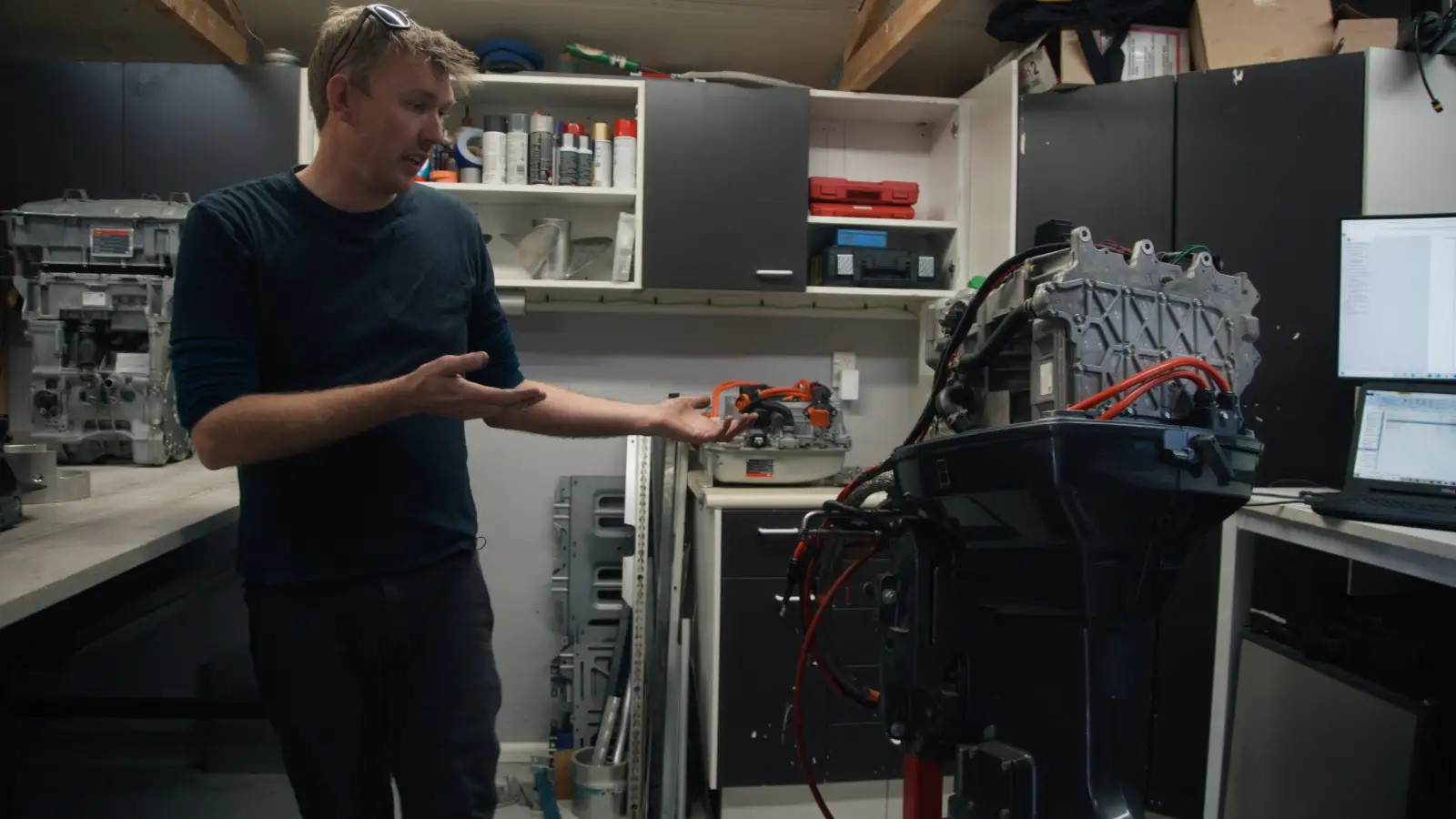
Ultimately, E-Stroke aims to produce off-the-shelf, electric outboard kits that are affordable and accessible.
“Families keep boats for a long period of time and the hulls remain as they are, but the motors often fall apart. So you'll often see an older hull with a new motor,” says Michael.
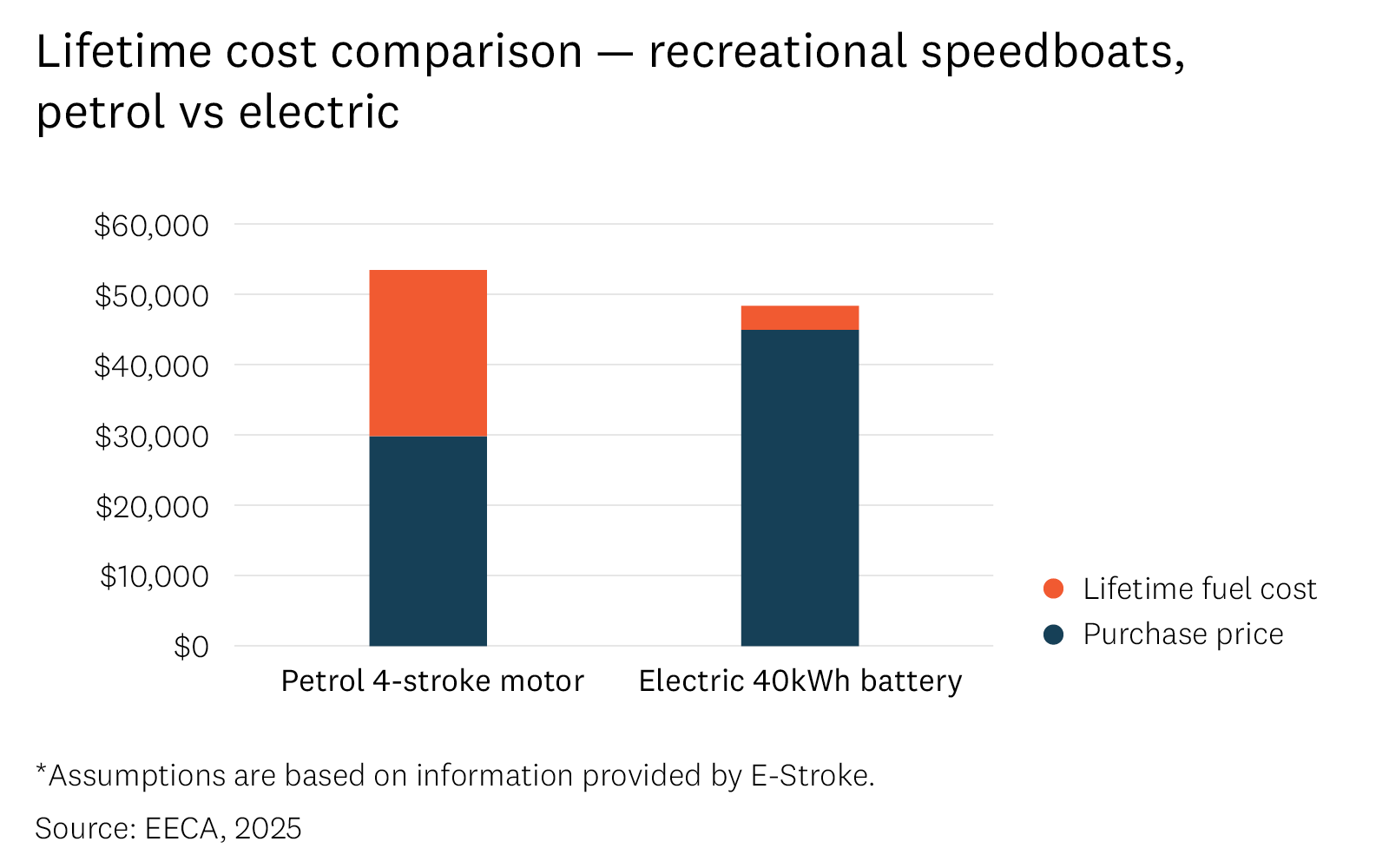
With a price point around the $30,000 to $50,000 mark, E-Stroke's kits will be comparable in cost to buying a 4-stroke outboard motor and having it fitted to your boat.
This is a much more affordable option than buying an electric boat brand new. Often electric boats come with advanced technology like hydrofoils which help improve efficiency, but push the price point up.
"We’d like to produce a kit that a third party could put on. All the parts are readily accessible for that. And that comes back to not modifying it too much, not making it too bespoke, keeping it as standardised as we can and using original factory parts as much as we possibly can.”
Cost comparison — Petrol vs electric boats
How much does it cost to replace a petrol outboard motor on a recreational speedboat? We compare a 40kWh electric system with a 4-stroke motor, looking at purchase and fuel costs over an expected 20-year lifespan.
FAQs — Electric recreation boats
Read next
-
Sizzling with electricity
Auckland restaurant East's new electric induction wok is improving energy efficiency and enhancing flavour in the kitchen.
- Case study
- Electricity
- Innovation
-
Targeted spraying with drone technology
How an electric drone sprayer has helped Felton Road Wines reduce its diesel use and transform its vineyard management.
- Case study
- Innovation
- Solar energy
-
Electrifying the orchard
How a Burro autonomous electric vehicle is powering a smarter future at 45 South Cherries.
- Case study
- Electricity
- Innovation