


About the database
The Energy End Use Database (EEUD) was developed by EECA and provides the latest data on energy type and end use in New Zealand homes and businesses, between January 1, 2017 and December 31, 2024.
The data is a resource for anyone who wants to understand changes in energy fuels and demand in New Zealand including analysts, researchers and modellers across the public and private sectors.
The EEUD gives insights into which sources of energy (including coal, petrol, electricity, biomass and other renewable sources) are being used by different sectors of the economy, and how that is changing.
Summary of insights by sector and fuel type
The Energy End Use Database is now updated with 2024 data. Key insights include;
-
Fossil fuels
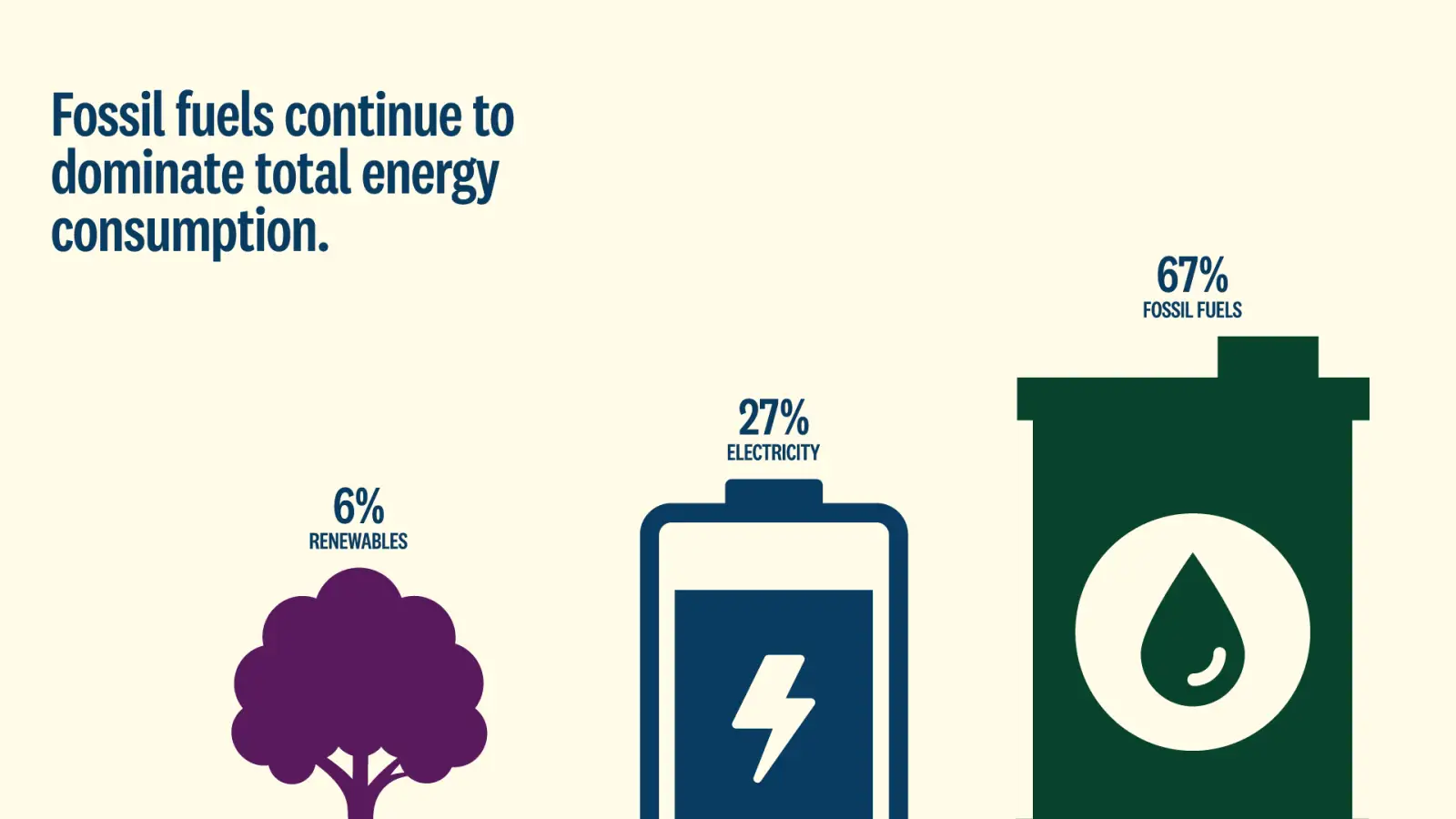
Fossil fuels continue to dominate New Zealand’s energy consumption — Supplying about two-thirds of the energy we use.
-
Transport
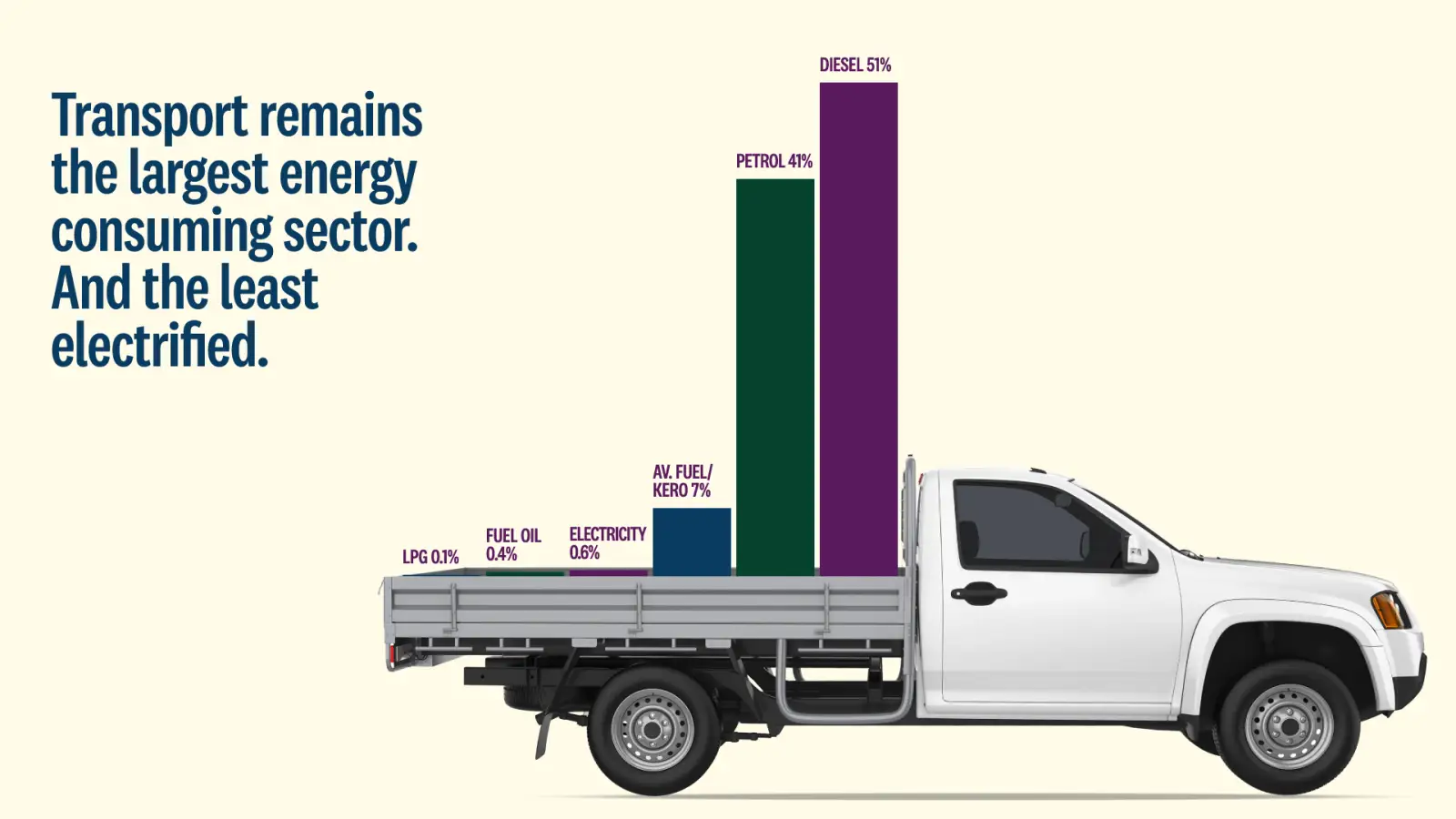
Transport is almost exclusively fossil-fuel-driven — Diesel makes up around half the energy used. Trucks consume 52% of the diesel used on our roads, 33% is used by vans and utes, 11% by light passenger vehicles and 4% by buses.
-
Electric vehicles
4% of road transport energy use is by conventional (non-plug-in) hybrid electric vehicles, plug-in hybrids and battery-electric vehicles combined - The majority of that is non-plug-in hybrids.
-
Industrial and manufacturing
Industrial and manufacturing’s fossil-fuel use has dipped to its lowest point in eight years – It makes up 54% of the sector’s energy consumption. Renewable fuels such as biomass (typically wood) are steady on around 15% while the remaining 31% is fuelled by electricity.
-
Coal consumption
Coal consumption in both dairy product manufacturing and meat processing has been falling - At the same time as electricity use has been gradually growing.
-
Data centres
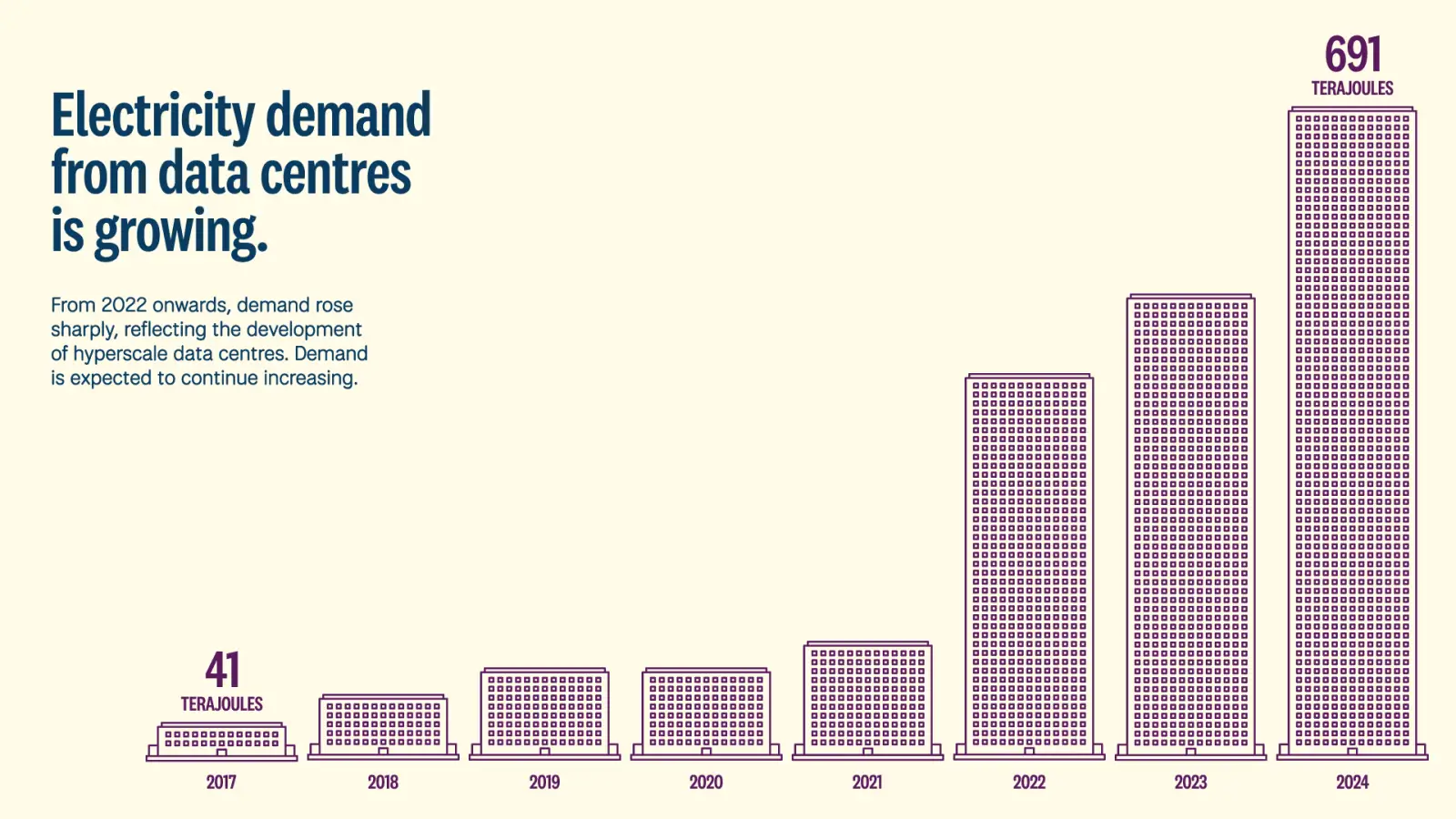
Data centres remain a relatively small proportion of electricity consumption – They consume about 0.5% of electricity but their energy consumption has increased significantly since 2022 and is expected to keep growing.
Fossil fuels continue to dominate total energy consumption
Fossil fuels make up about two thirds of total energy consumed in New Zealand, highlighting an opportunity to shift toward fuels with more stable pricing and improved system efficiency such as electricity. Locally-produced fuels can also build resilience in the energy system.
MBIE data shows that in 2024 85.5% of electricity was generated from renewable sources, such as hydro, wind and solar.
Transport remains the largest energy-consuming sector, and the least electrified
- Transport accounts for 39% of the country’s energy consumption and is typically powered by diesel (51% of transport energy) and petrol (41%), suggesting it offers the greatest opportunity to improve energy efficiency and reduce exposure to volatile fuel costs. Aviation fuel/kerosene for planes accounts for 7% of transport energy.
- Industry and manufacturing use 28% of our energy and roughly half of that is from fossil fuels, although coal use in dairy product manufacturing and meat processing is falling.
- Both the residential and commercial sectors use mainly electricity.
- The agriculture, forestry and fishing sector is roughly half fuelled by diesel.
Almost 96% of road transport energy is from petrol and diesel
Conventional (non-plug-in) hybrid vehicles (HEVs) (3.4%), plug-in hybrids (PHEVs) (0.2%) and fully battery-electric vehicles (BEVs) (0.5%) together contribute about 4% of road transport energy. This reflects a fleet that is changing gradually, with early electrification not yet significantly shifting overall energy use. In addition, because electric vehicles are typically much more efficient than petrol or diesel engines, they use less energy per vehicle than fossil-fuelled alternatives, further lowering their share of transport energy consumption.
The dominance of hybrids suggests the full efficiency, emissions and cost benefits of electric transport are not yet being realised at scale.
Note: Most electric and hybrid vehicles are in the commercial and light passenger vehicle categories (vans, utes, and cars). Only a very small proportion of trucks and motorcycles are electrified.
Fossil-fuelled energy consumption by businesses is falling
Fossil fuels reached their peak share of energy across all businesses (including the industrial/manufacturing, commercial and agriculture, forestry and fishing sectors) in 2019 at 55% and trended down to 51% in 2024.
Over the same period, electricity’s share of the business energy mix has increased by 4 percentage points from 34% to 38%. The gradual shift toward electricity reflects a move to more stable and potentially lower-cost energy sources, though the pace of change remains moderate.
Consistent increases in consumption of alternative renewable energy sources such as biomass remains a challenge.
Stationary energy use is highly concentrated
Stationary energy (energy consumed by systems or processes that are fixed in one place) includes process heat for manufacturing, space heating, water heating, lighting, refrigeration, pumping and electronics.
In general, stationary energy use is concentrated in a small number of industrial sectors, creating targeted opportunities to improve efficiency and energy cost management.
Combined, dairy manufacturing and the primary metals sectors (aluminium and steel manufacturing) account for 23% of stationary energy consumption.
Industrial/manufacturing runs on 15% renewable fuels (biomass and geothermal)
The share of renewable fuels in industrial and manufacturing energy has remained steady at around 15% (mostly biomass/wood but also geothermal energy and a small amount of biogas). However fossil fuels have dipped to 54%, the lowest share of industrial energy in eight years. The declining share of fossil fuels suggests increasing uptake of alternative energy sources, though with significant potential for further electrification to enhance efficiency, lower emissions and reduce exposure to fuel price fluctuations.
Dairy product manufacturing is gradually electrifying
Dairy product manufacturing is New Zealand’s largest consumer of manufacturing and industrial energy at 14%.
There has been a reduction in coal use, supported by investments in electrification at some facilities.
Fossil gas use saw an upswing in 2023 and remained stable into 2024. In 2025 Fonterra announced a plan to convert two of its gas boilers to electricity, which should impact gas use in the future.
EECA co-funded industrial projects continue to become operational, replacing fossil fuels with renewable fuels (biomass, biogas) and electricity.
Coal use is also falling in the meat and seafood sector, supported by growing adoption of electric and low-emissions technologies.
Electricity demand from data centres is growing
Data centres, while only consuming about 0.5% of total electricity demand in 2024, have increased energy consumption rapidly in recent years, following a period of steady growth between 2017 and 2020.
From 2022 onwards, demand rose sharply, reflecting the development of hyperscale data centres.
As a result, data centre electricity use has grown to become a more material component of New Zealand’s overall electricity demand, and demand is expected to continue increasing - highlighting the need for reliable electricity supply and efficient energy use to manage operating costs.
Using the dataset and data tool
The dataset is available as an online data visualisation application displaying the results with a user-friendly interactive interface. The data is also available as a downloadable spreadsheet of the entire dataset.
The tool uses annual energy demand data from MBIE and estimates of energy consumed by fuel type, sector, end use and technology.
Download the insights in full [PDF 331 KB]