

Different types of EVs offer unique benefits when it comes to charging, running costs and environmental impact. Find out about the main options, and what might work best for you.
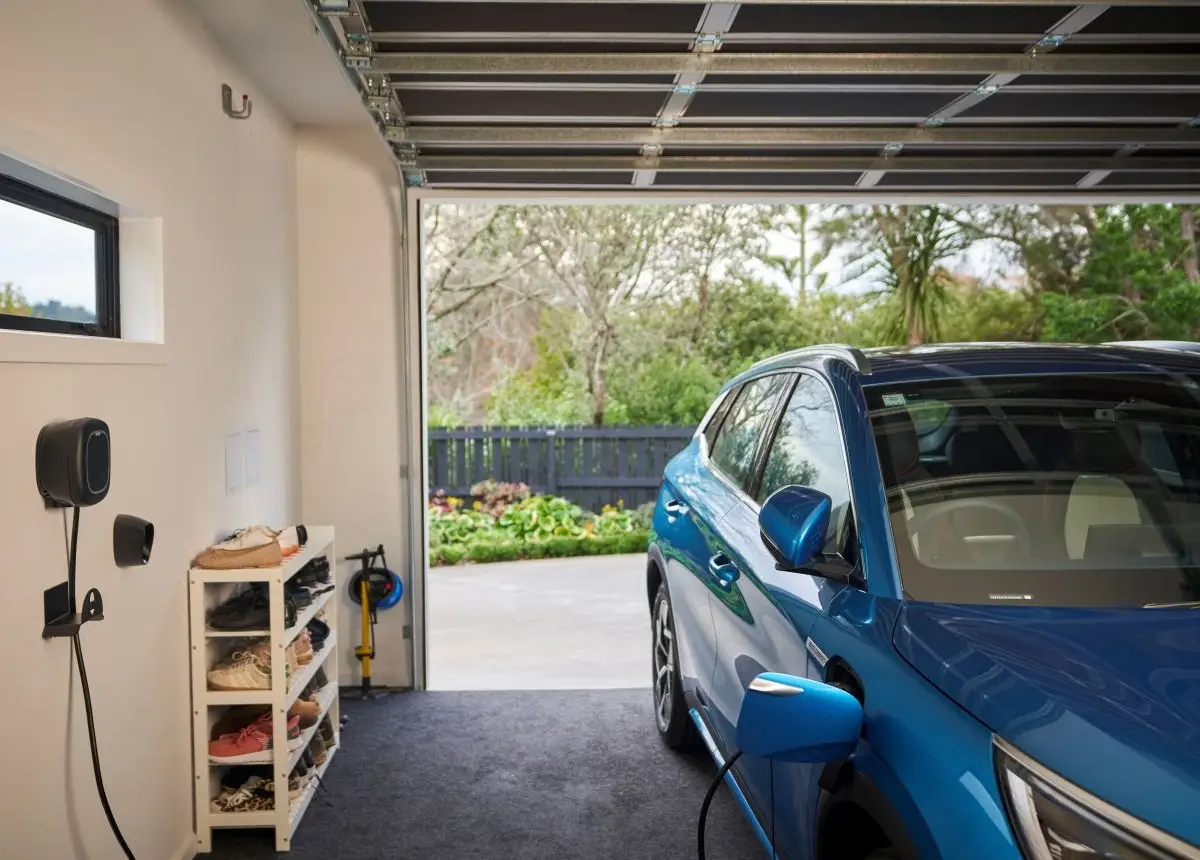
Battery electric vehicles
Battery electric vehicles (BEVs) are 'pure electrics' — they're powered solely by electrical energy stored in the battery.
A BEV has no exhaust pipe, and has fewer moving parts than a petrol, diesel, hybrid or PHEV — making them easier to maintain.
-
Charging a BEV
The most energy efficient way to charge a BEV at home is through a dedicated wall unit, though an electrical socket may be used. You can also utilise public charging stations.
Regenerative braking helps recharge the battery by recovering and storing energy when you slow down or brake. -
When a BEV is best
A BEV is best if you prioritise low running costs, travel within the vehicle’s battery range most days, and can charge the vehicle off the street overnight at home or at work.
Plug-in hybrid electric vehicles
Plug-in hybrid electric vehicles (PHEVs) have both an electric motor powered by a rechargeable battery and an internal combustion engine fuelled by petrol or diesel.
Most PHEVs drive in 'EV-only mode’ until the battery runs low, then automatically switch to the combustion engine.
-
Charging a PHEV
Plugging a PHEV into an external power source charges the battery, while regenerative braking recharges the battery during driving. Some models feature a small petrol engine (range extender) that kicks in when the battery runs low. Their range in EV-only mode varies between models — from 30 km to 100 km or more in newer models.
-
When a PHEV is best
A PHEV is best if you regularly take longer trips beyond the battery range, and can charge the vehicle off the street overnight at home, or at work.
Standard hybrid vehicles
Hybrids are more fuel efficient than a comparable petrol car but are not electric vehicles. They combine a combustion engine with a battery or on-board electric motor. Unlike BEVs and PHEVs, they can’t be plugged into an external power supply — the battery is charged by the combustion engine and regenerative braking.
Compare running costs
EVs are cheaper to run, costing the equivalent of $1.60c litre to ‘fill up’ when charged at home off-peak, including road user charges (RUC).1
They can also work out cheaper overall to own than their fossil-fuelled equivalent, thanks to that low-cost charging, and lower maintenance needs. You can use our Vehicle Comparison Calculator to see how different EVs stack up.