

Before you get the installation process underway, you’ll need to work with your chosen installer to plan the right solar system for your home.
Key things to consider
Your home solar system should factor in your current electricity usage, your budget for the project, the condition and orientation of your roof, along with your future plans.
-
Energy use
Look at your annual energy use, and consider future plans.
-
Your roof
The available sunny area, design and condition of your roof.
-
System setup
Your budget should be balanced with your goal for your solar setup.
System size should match your energy use
It’s best to base the size of your home solar system on the amount of electricity you normally use, while factoring in any future needs. This will give you a good idea of how much power your system should generate.
-
Current usage
Your energy bills will show your current annual power usage. The average NZ household uses about 7,000 kWh per year (an annual cost of $2,400). You are likely to benefit most from solar if you use more than this. Check what time of day you’re using the most electricity, as solar systems only provide power during daylight hours.
-
Future needs
Consider whether you’re likely to add any high energy users, like an electric vehicle or spa pool, that would increase the ideal system capacity for your home.
You should also factor in whether you are likely to have more people living in your home over the coming years.
Your roof can impact design
Below is a list of features that impact how suitable your roof is for installing solar. If your roof has features that aren’t ‘ideal’, this doesn’t mean that solar is not an option, but rather that you may need to factor this into the design of your system.1
Your system setup
Having a system larger than you need will not be cost effective, while a smaller one may mean you miss out on potential savings. The essential parts of a solar system are the panels and an inverter, while a battery is optional.
Solar panels
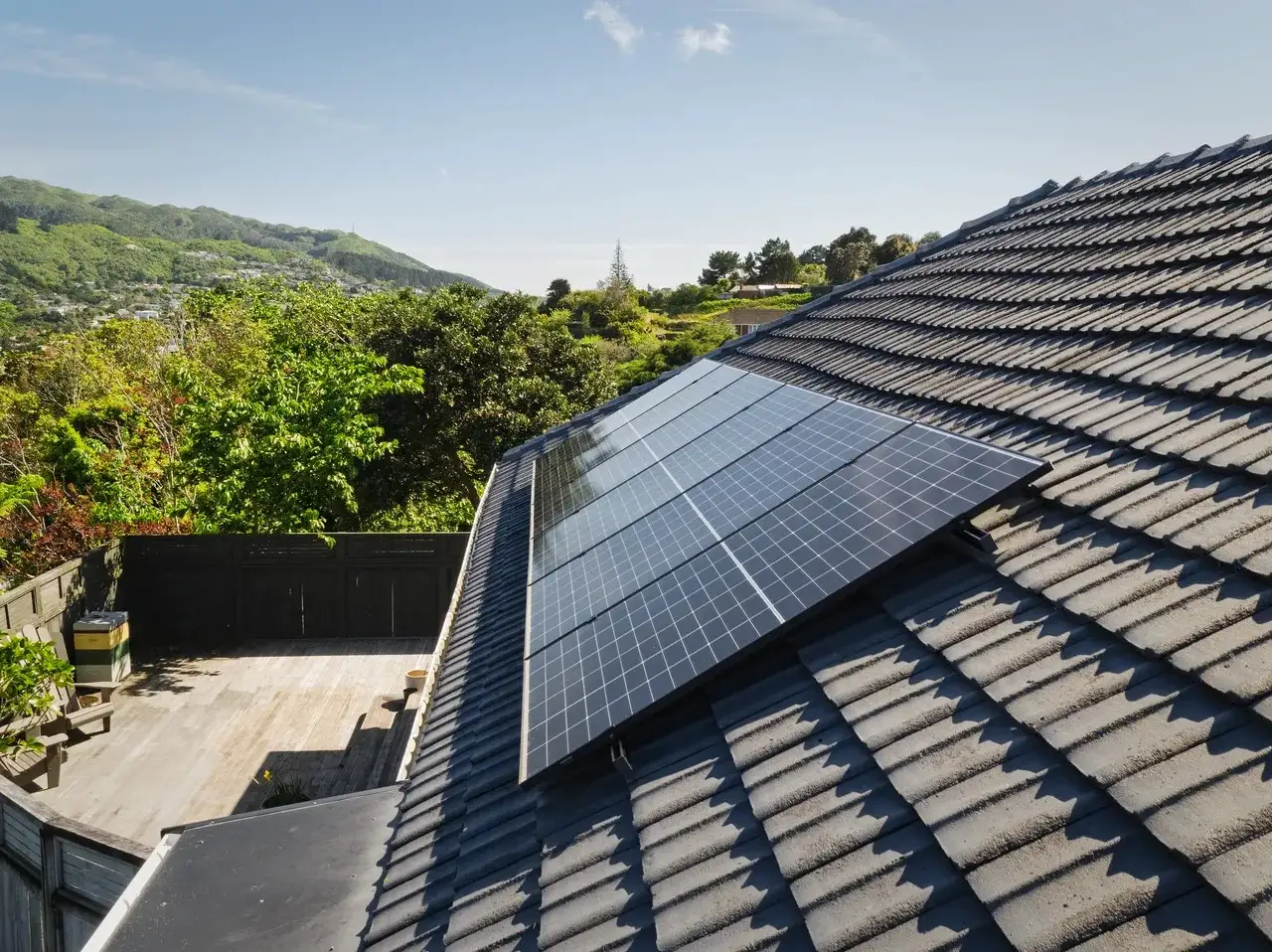
Solar photovoltaic (PV) panels convert sunlight into electricity.
The panels are usually installed on your roof, but they can also go on facades, conservatory roofs, garages, or stands on the ground.
Common questions about solar panels
Inverter
The inverter turns the direct current (DC) electricity generated by solar panels into alternating current (AC) electricity that can be used in your home.
A high-quality inverter will get more power from your solar system, improve electrical safety, and last much longer.
Common questions about inverters
Battery
With a battery, you can use stored electricity after dark or in emergencies. You’d also have less need to buy electricity outside of daylight hours.
A battery isn’t essential for solar — many homes install panels first and add a battery later.
Common questions about batteries
Does a battery makes sense?
When a battery is beneficial
- You have high electricity use in your household, outside of daylight hours.
- You want backup power during outages, particularly useful if you live rurally.
- You want to increase self-sufficiency and use more of your solar power.
When a battery is not cost effective
- You already use most of your power during the day.
- You have relatively low electricity use.
- You want the fastest possible payback — batteries typically extend the payback period.
Timers and diverters are beneficial add-ons
If you’ve got an existing electric hot water cylinder, including a timer or solar diverter in your install can turn your cylinder into a cheap form of energy storage. Some newer models offer these as built in features.
These devices will pre-heat your hot water while the sun is shining so you can make use of it later. This will save you money as heating water is a large part of most household power bills.
Not all solar is ‘off-grid’
Solar systems can either be connected to or independent of the New Zealand electricity grid.
For most homes, it’s more cost effective to maintain a grid connection, unless you live somewhere where the connection needs to be established.
-
Grid-tied solar
Homes connected to the grid pay for electricity when the solar system doesn’t generate enough power — and can sell excess electricity that isn’t used back to retailers (or store it in a battery).
-
Off-grid solar
Some houses are completely independent of the electricity grid and rely on very large systems, batteries, or fossil fuelled back-ups to store and power their homes outside of daylight hours, or when there is an outage.
Next step
-
Ready to get an install underway?
Find out how to source and compare quotes, and what installation looks like.
-
Learn more about your power use
Understand your payments, and where changes could make a difference.